Written by Sajid, Health Content Researcher
Researched from clinical literature, hospital health resources, and medical guidance to help you understand what separates a cankle from normal ankle swelling. For informational purposes only, not a substitute for professional medical advice.
Swollen cankles happen when fluid builds up around your ankle and lower calf, making the area puff up and lose its normal shape. Doctors call this fluid buildup edema, and it happens when extra fluid leaks out of small blood vessels and settles into the tissue around your ankle. Sometimes this is a normal reaction to a long day on your feet. Other times, it is your body’s way of flagging something worth a closer look. Telling the difference starts with one simple thing: is there a clear curve between your calf and your foot, or not.
What Makes Your Ankle Look Like a Cankle
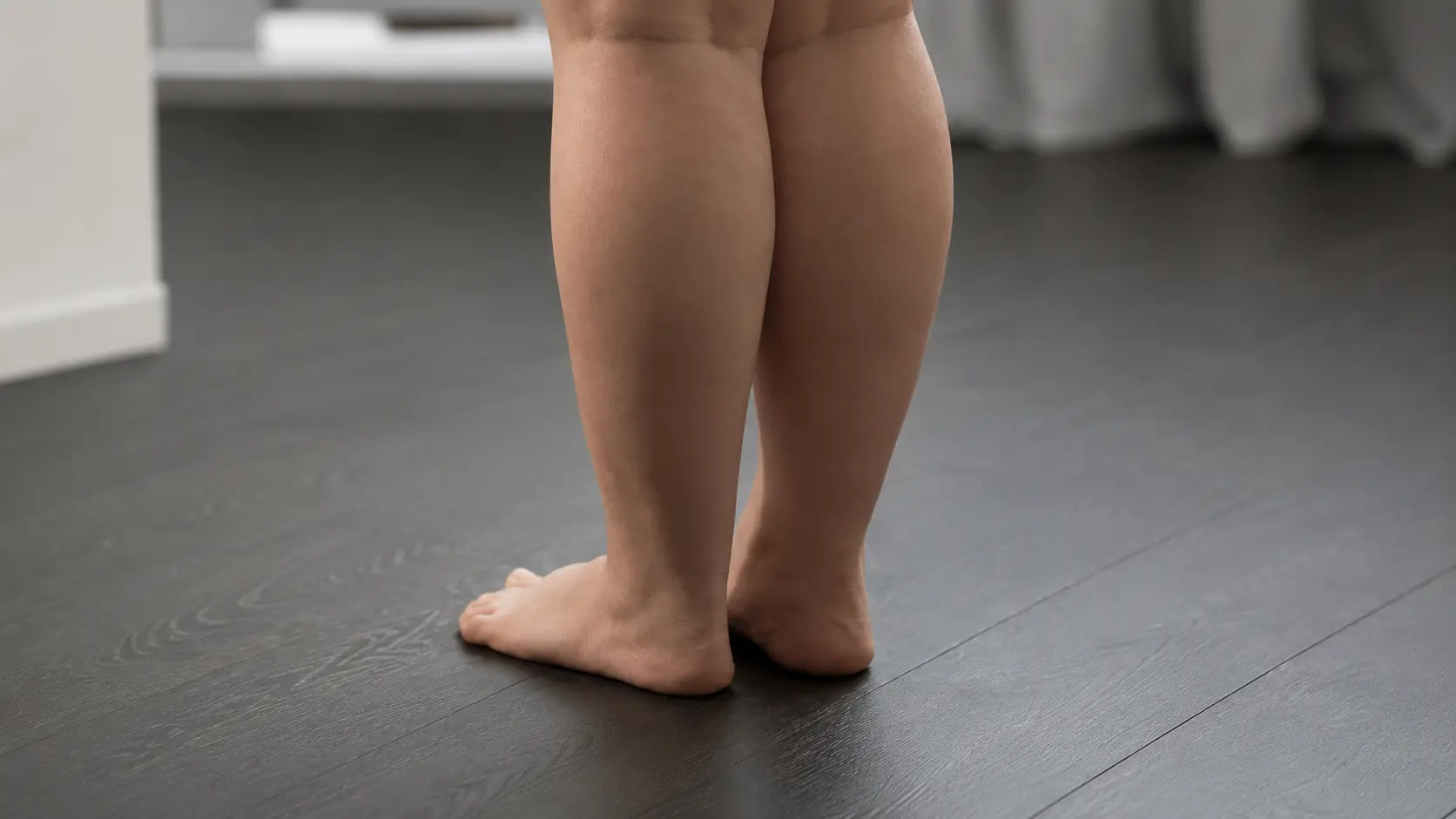
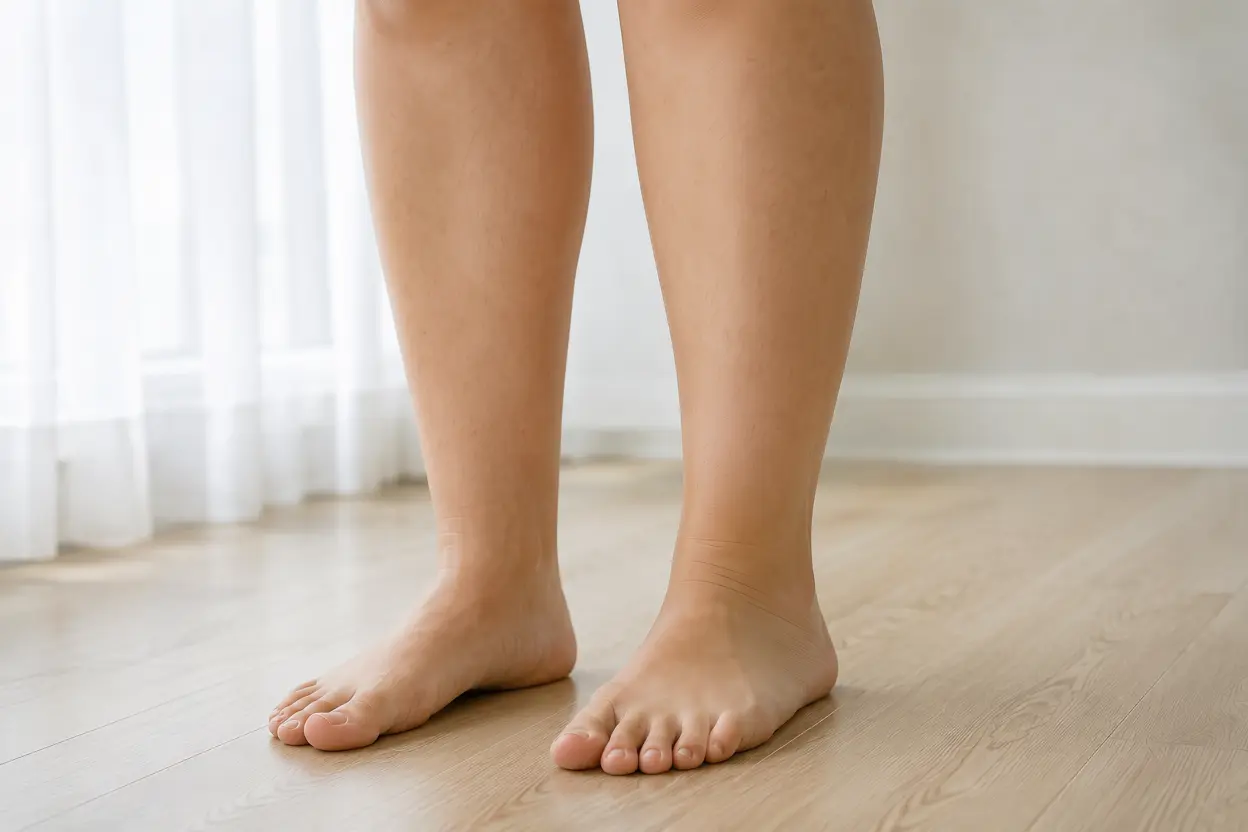
A normal ankle narrows before it reaches your foot, with visible tendons and a defined bend just above the heel. With cankles, that narrowing barely shows, so your leg looks almost straight from calf to foot, and the ankle bone is much less visible. This is usually just genetics. Research on body fat distribution shows it is highly heritable, with genetics accounting for up to 60 percent of where fat settles on your body, according to a genetics review published in Diabetologia. The causes behind cankles vary from person to person, but genetics is almost always part of the picture.
Cankles vs Ankles at a Glance
| Feature | Normal Ankle | Cankles |
|---|---|---|
| Visible taper | Clear inward curve above the foot | Little to no curve, straight column shape |
| Consistency | Same shape all day | May change between morning and evening |
| Skin texture | Smooth, no tightness | Can look shiny or stretched if swelling related |
| Press test | Skin bounces back immediately | May leave a slow fading indentation if fluid related |
| Both legs | Usually match in size | Genetic cankles match, swelling often affects one leg more |
| Family pattern | Varies, not usually inherited | Often shared among close family members if genetic |
| Response to rest | No noticeable change | Swelling related cases often improve after elevation |
Structural Shape or Swollen Cankles From Fluid
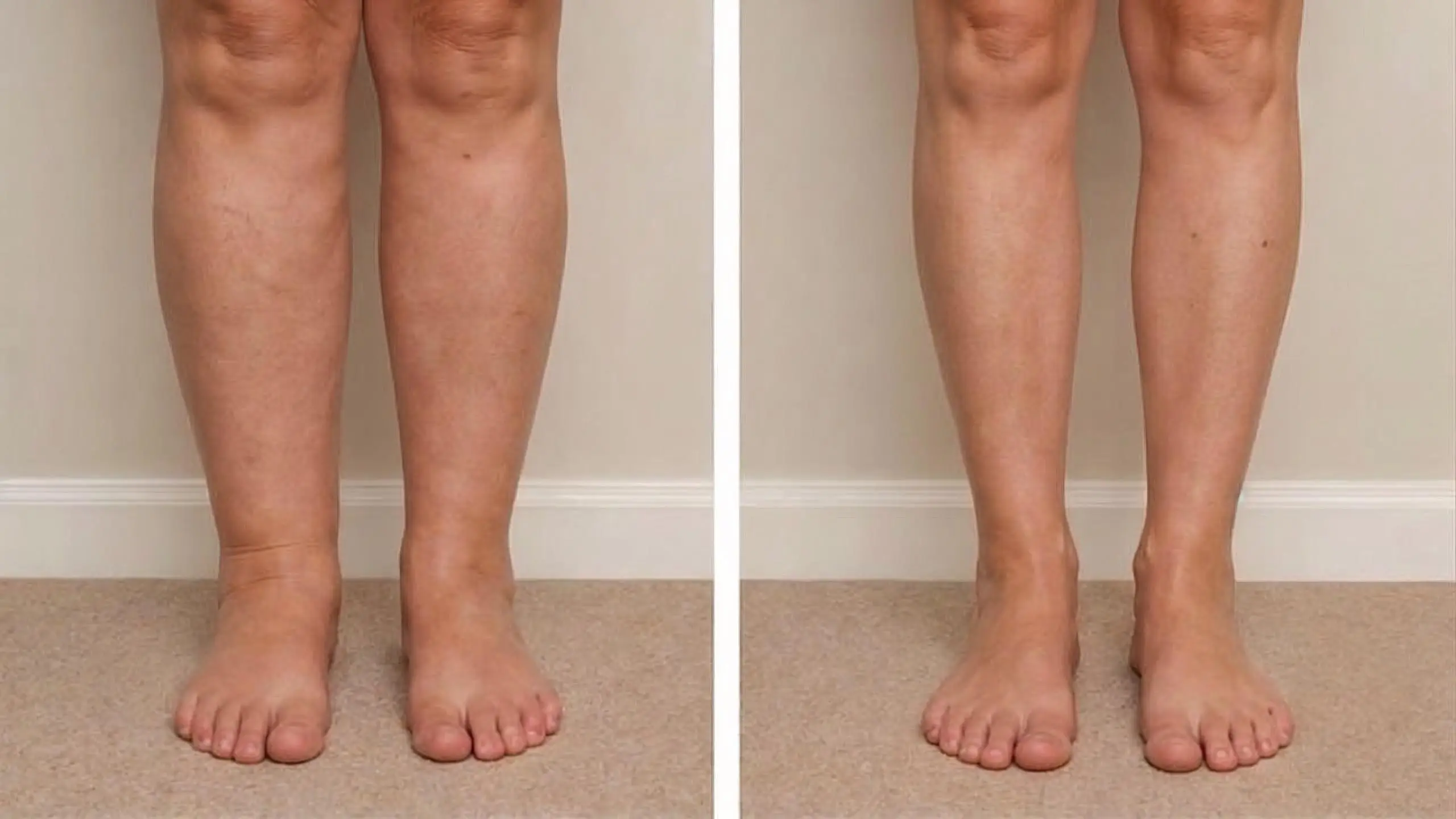
Press gently on the skin above your ankle bone. If it bounces back right away, that’s just your shape. If it leaves a slow fading dent, that’s called pitting edema, and it usually means fluid, not fat or bone, is behind it. This kind of swelling can show up after standing too long, sitting through a long flight, hot weather, eating too much salt, pregnancy, or certain medications like blood pressure drugs and steroids. In most of these cases, it settles down on its own once the trigger passes.
Structural cankles look the same all day, every day. Swollen cankles from fluid tend to get worse by evening and ease up once you rest with your legs up, which is one of the clearest ways to tell genetic causes from medical ones apart.
Medical Conditions That Can Cause This
Beyond everyday triggers like heat, salt, or standing too long, a few medical conditions can cause the same kind of swelling.
Kidney Disease
When your kidneys cannot clear enough sodium and water from your body, that extra fluid settles in your legs and ankles, according to the National Institute of Diabetes and Digestive and Kidney Diseases.
Liver Disease
Advanced liver damage, called cirrhosis, can stop your liver from making enough of a protein called albumin, which normally keeps fluid inside your blood vessels instead of leaking into your tissue, per Mayo Clinic.
Lymphedema
This happens when damage to your lymphatic system, often from cancer treatment, causes fluid to collect in a limb, according to Cleveland Clinic.
Lipedema
This one is different since it involves fat, not fluid, usually building up from the hips down to the ankles. It affects up to 11 percent of women, per the National Institutes of Health.
None of this means your swelling points to something serious. Most of the time, it really is just your shape or a passing trigger. But knowing these conditions exist helps you take the right next step if something about your swelling feels off.
How to Check at Home
A few quick checks can tell you a lot.
- Look at your leg from the side while standing barefoot on flat ground
- Check for a clear curve just above your foot
- Press the skin above your ankle bone and see how fast it bounces back
- Compare both legs to see if one looks more swollen
- Notice if the shape changes between morning and night
If nothing changes day to day, it’s likely just your shape. If it shifts, especially by evening, fluid is probably involved.
Signs Your Swelling Needs Attention
Most of the time, this is nothing to worry about. But call 911 right away if swelling comes with chest pain or trouble breathing, since that can point to something serious with your heart or lungs.
For everything else, call your doctor if you notice any of these.
- A leg or foot that’s swollen and red or warm to the touch
- A fever alongside the swelling
- Swelling getting worse with existing heart or kidney disease
- Sudden swelling during pregnancy
- Swelling that isn’t improving even after rest and elevation
One sided swelling deserves a quick call too. It can sometimes point to a blood clot, which blocks normal blood flow in the leg and causes fluid to back up behind it, often along with pain, warmth, or redness in that one spot. Swelling from poor circulation may be chronic venous insufficiency, where weakened vein valves let blood pool in the legs instead of flowing back up to the heart. Swelling paired with fatigue or shortness of breath can be an early heart signal worth checking too. In heart failure, the heart cannot pump strongly enough, so blood backs up in the veins and pushes fluid out into the surrounding tissue, something the American Heart Association explains clearly.
What You Can Do
If your cankles are structural, nothing here needs fixing, though calf raises can build definition if you want it.
If swollen cankles from fluid are the cause, small habits help a lot.
- Elevate your legs above heart level when you can
- Cut back on salt
- Stay active instead of sitting or standing too long
- Wear compression socks
Elevation, salt reduction, movement, and compression are the simplest ways to get rid of cankles caused by fluid, and most people notice a difference within days.
Summary
The real difference comes down to one thing: is there a clear taper, or not. Structural cankles stay the same no matter the day. Swollen cankles from fluid change with activity, worsen by evening, and often improve with rest. Most of the time it’s just how you’re built, but sudden, painful, or one sided swelling is worth a call to your doctor.
Frequently Asked Questions
What’s the difference between cankles and ankles?
A normal ankle has a clear curve above the foot. Cankles don’t, so the leg looks like one straight shape from calf to foot.
Why do they call ankles cankles?
It’s just a mix of calf and ankle, describing legs where the two blend together with no clear line between them.
Are cankles healthy?
Cankles are healthy in most cases. If they’re genetic, they’re just your natural shape and don’t affect your health. If swelling is behind them, it’s worth figuring out why.
Do cankles ever go away?
Genetic cankles usually don’t change much, since that’s your bone and muscle structure. Swollen cankles from fluid often improve with rest, compression, or treating whatever is causing the buildup.
References
- Mayo Clinic. Edema: Symptoms and Causes.
- Cleveland Clinic. Chronic Venous Insufficiency.
- Centers for Disease Control and Prevention. About Blood Clots.
- American Heart Association. Warning Signs of Heart Failure.
- National Institute of Diabetes and Digestive and Kidney Diseases. Chronic Kidney Disease.
- Mayo Clinic. Cirrhosis: Symptoms and Causes.
- Cleveland Clinic. Lymphedema.
- National Institutes of Health, Genetic and Rare Diseases Information Center. Lipedema.
- Diabetologia. The Genetics of Fat Distribution.Last updated: 8 August 2026