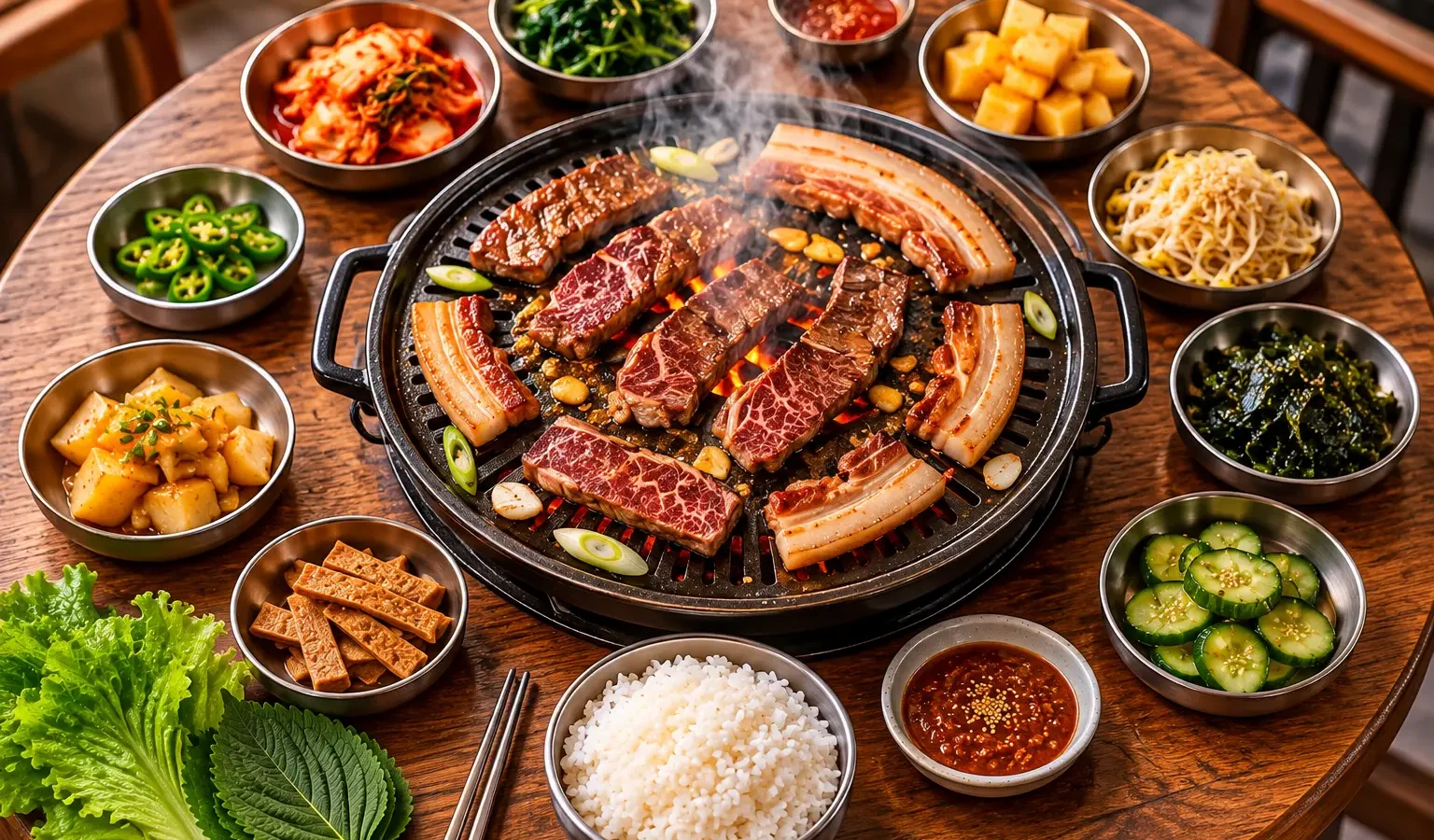
Korean BBQ at Home for Beginners: Complete Guide
Quick Answer: What Is Korean BBQ at Home?
Korean BBQ at home means you grill meat at your table and eat it wrapped in lettuce.
You don’t need a restaurant. You need a small grill or pan in the middle of the table, 2 to 3 kinds of meat, rice, lettuce leaves, 3 sauces, and 4 to 6 small side dishes called banchan.
For 4 people, buy about 1.5 kg of meat total. Grill in small batches, cut with scissors, wrap it, and eat it in one bite. That’s it.
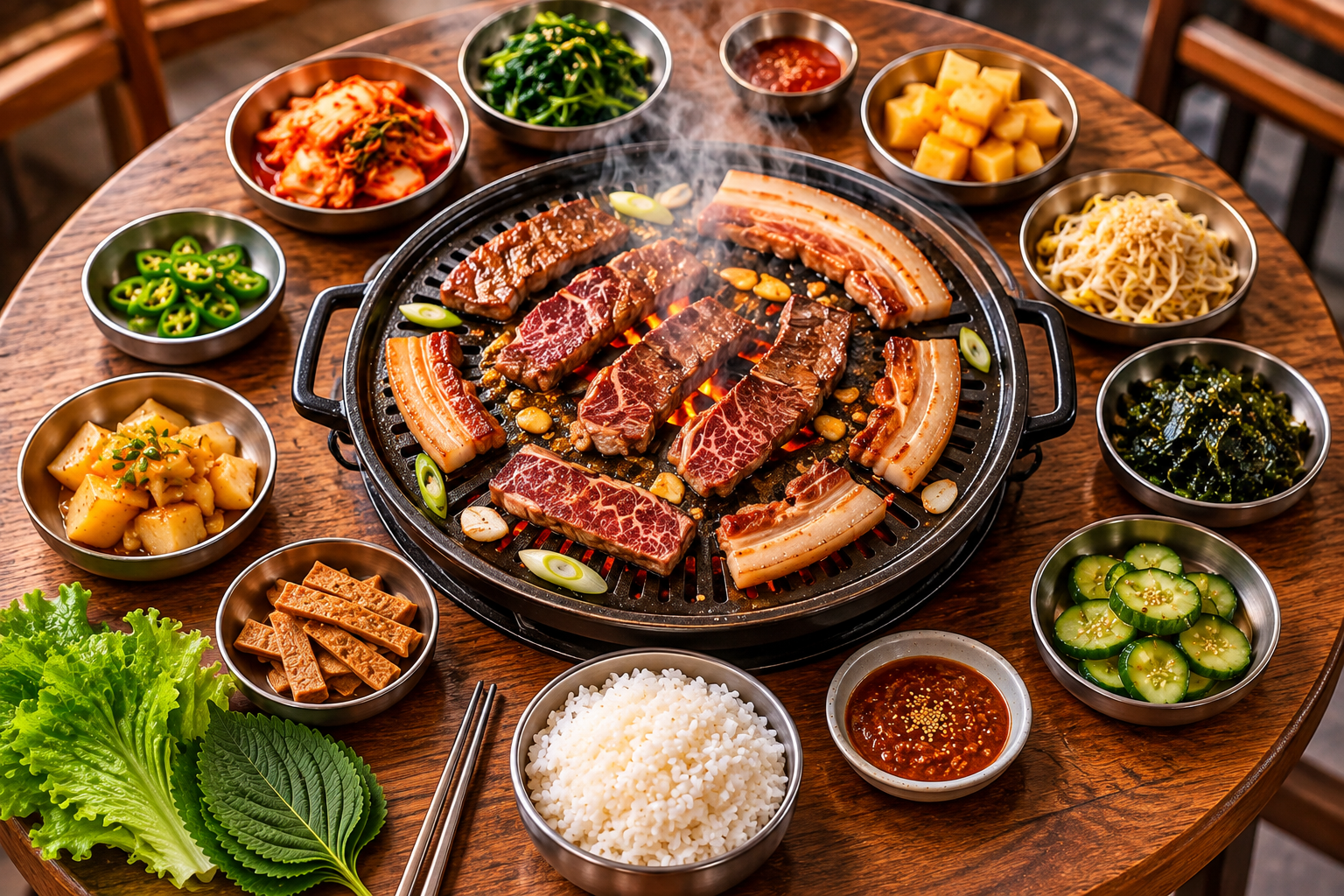
What Makes Korean BBQ Different?
In most BBQs, one person grills and everyone waits. In Korean BBQ, everyone grills together.
The meat is the star, but the wraps are the real magic. A lettuce leaf + a little rice + grilled meat + a tiny bit of ssamjang + kimchi = one perfect bite. Sweet, salty, spicy, fresh, and smoky all at once.
You don’t need to be a chef. You just need to be organized before you start.
What You Need Before You Start
Equipment (Keep It Simple)
You have 3 good options. Pick one:
- Best option: Portable butane burner + Korean grill pan. This feels most like a restaurant.
- Easy option: Electric tabletop grill. Less smoke, easy to clean.
- No extra shopping option: Large cast-iron pan or griddle on your stove. Works perfectly fine.
You also need:
- Long tongs (2 pairs, one for raw meat, one for cooked)
- Kitchen scissors for cutting meat on the grill
- Small bowls for banchan and sauces
- Chopsticks, small plates, and paper towels
- A wet towel under your burner for safety
How Much Meat For 4 People?
Buy 350 to 400g per person if BBQ is the main meal. For 4 people, that is:
- 500g Bulgogi (thin beef)
- 600g LA Galbi (beef short ribs)
- 500g Pork Belly (thick slices)
That is 1.6 kg total. It sounds like a lot, but people eat more at KBBQ because it’s fun and slow.
The 4 Meats: Easy Marinades
You don’t need all 4. Start with 2 if it’s your first time. Bulgogi + Pork Belly is the easiest combo.
1. Bulgogi: Sweet Soy Beef (Start Here)
Bulgogi means “fire meat.” It’s thin beef in a sweet, garlicky marinade. This is the one everyone loves first.
For 500g thinly sliced ribeye or sirloin:
- 4 tbsp soy sauce
- 2 tbsp brown sugar
- 1/2 grated Asian pear (not 1/4, you need enough to tenderize)
- 1/4 grated onion
- 1 tbsp toasted sesame oil
- 1 tbsp minced garlic
- 1 tsp grated ginger
- 1 tbsp mirin or rice wine
- Black pepper + 2 sliced green onions
Mix it all. Add the beef. Marinate 30 minutes to 2 hours only if you are using pear.
Why so short? Pear has an enzyme that makes meat tender, but if you leave it overnight it will make the meat mushy. If you skip the pear, you can marinate overnight safely.
Grill: 1 to 2 minutes per side. It cooks fast because it’s thin.
Beginner tip: Put the beef in the freezer for 30 minutes before slicing. Cold beef slices much thinner.
2. LA Galbi: Beef Short Ribs
LA Galbi is short ribs cut thin across the bone. You see this in every Korean BBQ restaurant
For 600g flanken-cut short ribs (about 1/3 inch thick):
- 1/4 cup soy sauce
- 2 tbsp brown sugar + 1 tbsp honey
- 1/2 grated Asian pear
- 1/4 grated onion
- 2 tbsp minced garlic
- 1 tsp minced ginger
- 2 tbsp toasted sesame oil
- 2 tbsp mirin or rice wine
- 2 tbsp water
- Black pepper
Marinate 6 to 12 hours, ideally overnight. This one needs time because the meat is thicker and has bones.
Grill: 3 to 4 minutes per side until charred at the edges. Cut into smaller pieces with scissors on the grill.
Why 1/4 cup soy, not 1/2 cup? The classic recipe uses 1/2 cup soy for 3 to 4 pounds of ribs. For only 600g, 1/2 cup would be way too salty. This corrected amount keeps the balance right.
3. Samgyeopsal: Pork Belly (No Marinade Needed)
This is the simplest and most popular meat in Korea. Thick pork belly, no marinade, just salt and dip.
Buy pork belly slices. Grill until golden and crisp at the edges. Cut into bite-size pieces. Sprinkle a little salt.
Dip it in sesame oil + salt + pepper. That’s the classic way.
How long to grill? It depends on thickness:
- If thin (1/4 inch): 2 to 3 minutes per side
- If thick (1/2 inch): 4 to 5 minutes per side
Beginner tip: Don’t crowd the pan. If you add too much meat at once, it steams instead of searing. Grill 5 to 6 pieces at a time.
4. Spicy Pork: Gochujang Marinade (Beginner Version)
If you like spicy food, add this one. This is a simple home version, not a strict restaurant recipe, but the balance works.
For 500g sliced pork shoulder or chicken thigh:
- 3 tbsp gochujang (Korean chili paste)
- 2 tbsp soy sauce
- 1 tbsp sugar or honey
- 1 tbsp sesame oil
- 1 tbsp minced garlic
- 1 tbsp rice vinegar
Marinate 2 hours or more. Grill 3 to 4 minutes per side. This one caramelizes fast because of the sugar, so watch it closely.
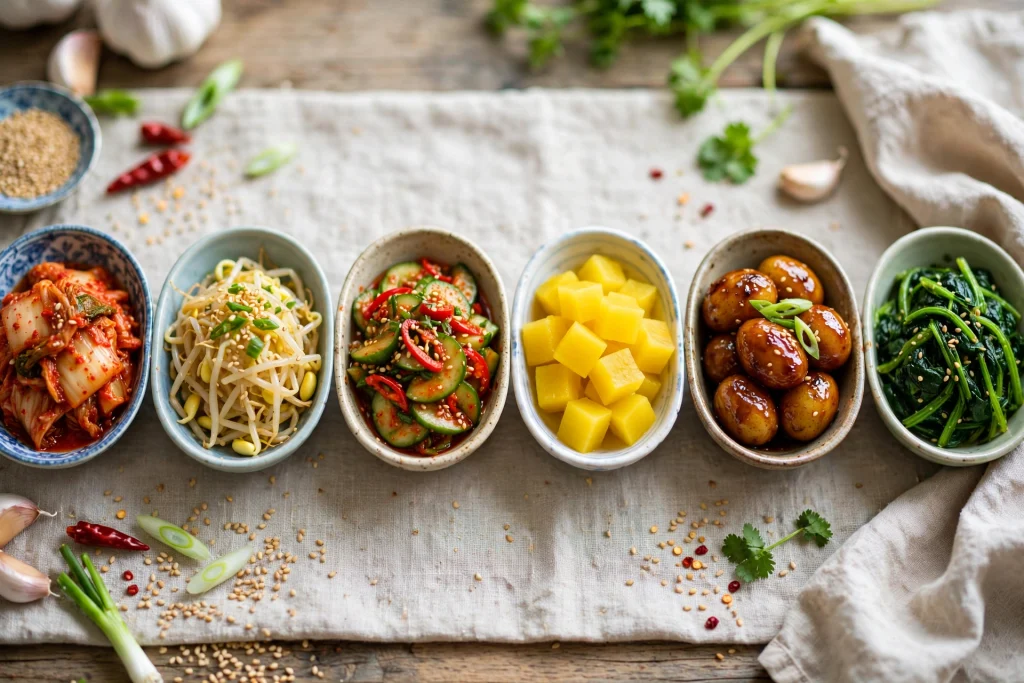
Banchan: The Small Side Dishes
Banchan means side dishes. They are not optional. They are what makes the meal feel Korean.
You don’t need to make 12. Make 4 to 6, and buy kimchi. Store-bought kimchi is totally fine, even Korean families buy it.
Easy banchan for beginners:
- Kimchi: Buy a good jar. Spicy, sour, crunchy. Non-negotiable.
- Kongnamul: Seasoned bean sprouts. Boil sprouts 5 minutes, toss with sesame oil, garlic, salt.
- Oi Muchim: Spicy cucumber salad. Sliced cucumber + vinegar + sugar + chili flakes + sesame.
- Gamja Jorim: Glazed baby potatoes. Potatoes simmered in soy, sugar, and mirin until shiny.
- Sigeumchi Namul: Sesame spinach. Blanched spinach + garlic + sesame oil.
- Pickled radish: Sweet, yellow, crunchy. Buy it or use regular pickled radish.
Serve banchan in small bowls. Refill them. They are meant to be small and shared.
The 3 Sauces You Need
1. Ssamjang (Corrected Ratio)
This is the thick, savory sauce you put inside your wrap. Don’t skip it.
Correct ratio is 2:1 — doenjang should be double the gochujang.
Mix:
- 2 tbsp doenjang (fermented soybean paste)
- 1 tbsp gochujang (Korean chili paste)
- 1 tsp minced garlic
- 1 green onion, chopped
- 1 tsp sesame oil
- 1 tsp sesame seeds
- 1 tsp sugar
Mix and taste. It should be salty, a little spicy, and a little sweet. Use only a pea-size amount in each wrap. A little goes a long way.
2. Sesame Oil Dip (For Pork Belly)
Mix toasted sesame oil + pinch of salt + black pepper + sesame seeds. Dip your pork belly in this. Simple and perfect.
3. Quick Pickled Onions
Slice 1 onion thin. Soak in 1/2 cup vinegar + 1 tbsp sugar + pinch of salt for 30 minutes. These cut through the fatty meat and clean your palate.
Rice, Lettuce, and The Ssam Bar
Set up a ssam bar so everyone can build their own wrap.
You need:
- Steamed rice: Short-grain rice is best. Wash it 3 times until water is clear, then cook. Keep it warm.
- Lettuce leaves: Butter lettuce or romaine, washed and dried. Perilla leaves if you can find them, they taste minty and amazing.
- Sliced garlic: Thin raw garlic slices. Just one per wrap.
- Sliced jalapeno or green chili: For heat lovers.
- Kimchi: For inside the wrap.
How to set the table: Grill in the middle. Banchan in a ring around it. Rice bowls in front of each person. Lettuce and sauces within reach. Tongs and scissors next to the grill. Keep raw meat on a chilled plate, not on the table for an hour.
How To Grill: Step by Step (Showtime)
- Heat your grill. Medium-high heat. Lightly oil it. It should sizzle when meat touches it.
- Grill in batches. Start with pork belly, because its fat seasons the grill. Then do bulgogi, then galbi, then spicy pork last (so the spicy sauce doesn’t burn and stick).
- Don’t press the meat. Let it char. Flip once.
- Cut on the grill. Use scissors to cut big pieces into bite-size pieces. This is normal in Korea.
- Move cooked meat to a clean plate. Never put cooked meat back on the raw meat plate.
- Grill some extras: Mushrooms, sliced onion, kimchi, and garlic on the grill taste amazing. Grill kimchi for 1 minute until it chars a little.
Ventilation tip: Open a window. Turn on your fan. Grilling indoors will make smoke. A cross-breeze helps a lot. Never use outdoor charcoal inside.
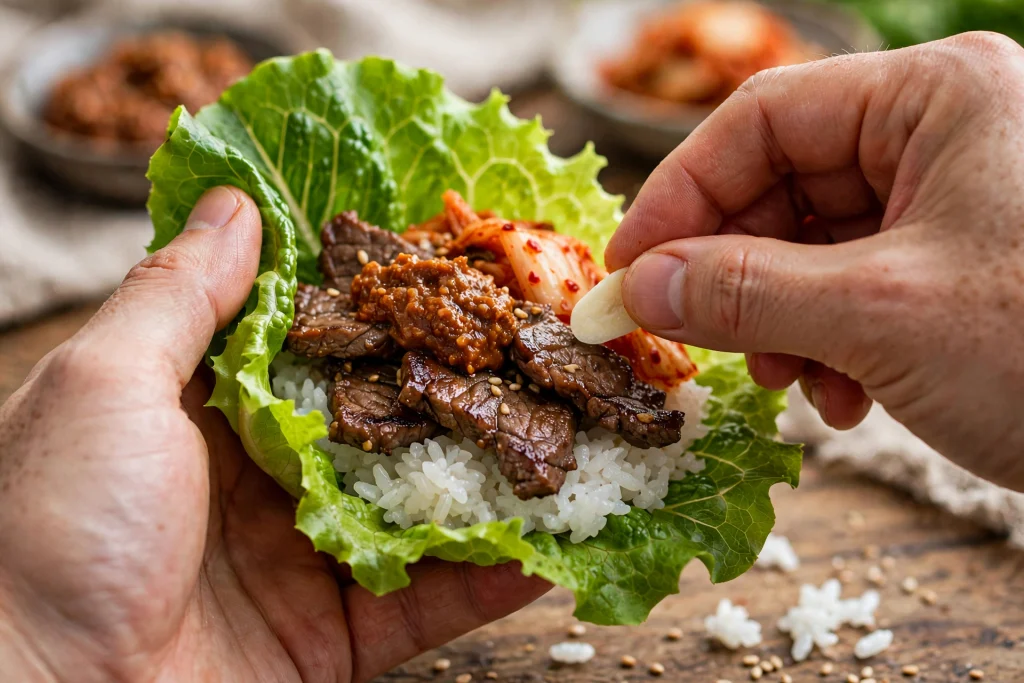
How To Build The Perfect Ssam (Lettuce Wrap)
This is the part most beginners get wrong. They make a huge wrap and it falls apart.
Do it in this order, and keep it small:
- Take one lettuce leaf in your hand
- Add a small spoon of rice (not a big scoop)
- Add one piece of meat
- Add a pea-size of ssamjang
- Add a tiny bit of kimchi
- Add one slice of garlic if you like it
- Fold it, put the whole thing in your mouth in one bite
One bite is the rule in Korea. If you take two bites, it falls apart. It feels strange at first, but it tastes 10 times better in one bite.
Your Timeline: No Stress Version
Night Before:
Marinate galbi. Make ssamjang. Buy kimchi and lettuce.
Morning:
Make banchan that keeps well (potatoes, bean sprouts, spinach). Do NOT marinate bulgogi yet if you are using pear.
2 Hours Before:
Marinate bulgogi now. Cook rice. Make cucumber salad. Slice garlic, chili, and onions. Set the table.
Showtime:
Heat grill. Grill, wrap, eat. Don’t try to cook everything at once. Slow is good.
Finale:
Don’t clean the grill yet. Make kimchi fried rice on it.
The Finale: Kimchi Fried Rice On The Grill
This is the best part and most beginners skip it.
Use the leftover juices on the grill. Add:
- 2 cups cooked rice (day-old is best)
- 1 cup chopped kimchi
- 1 tbsp gochujang
- 1 tbsp sesame oil
- Sliced green onion
Press it flat on the grill. Let it get crispy on the bottom for 3 to 4 minutes. This crispy bottom is called nurungji. Top with cheese or a fried egg if you want. Everyone will fight for the crispy bits.
What To Drink
Keep it simple:
- Barley tea (cold)
- Sparkling water with yuzu or lemon
- Sweet rice drink called sikhye, if you can find it
- For adults, cold beer or soju is traditional
Shopping List For 4 People
Meat:
- 500g thin beef for bulgogi
- 600g LA galbi short ribs
- 500g pork belly slices
Produce:
- Lettuce + perilla leaves, garlic, green onions, jalapenos, mushrooms, onion, cucumber, bean sprouts, spinach, baby potatoes, Asian pear or apple
Pantry:
- Soy sauce, sesame oil, brown sugar, honey, gochujang, doenjang, mirin, rice vinegar, sesame seeds, short-grain rice, kimchi
If you are short on time: Buy pre-marinated meat and pre-made ssamjang and kimchi from a Korean grocery store. It is still real Korean BBQ, and it’s how many busy Korean families do it too.
5 Common Mistakes Beginners Make
- Marinating bulgogi too long with pear. Pear makes it mushy after 2 hours. Keep it short.
- Using too much soy sauce for galbi. Scale the marinade to your meat weight.
- Too much ssamjang. It overpowers everything. Pea-size only, and remember doenjang is double gochujang.
- Crowding the grill. Meat steams instead of searing. Small batches are better.
- Big wraps. Keep it one bite. Small is better.
Cleanup
Soak your grill pan in hot water right after you finish. Banchan keeps 2 to 3 days in the fridge. Leftover marinated meat should be cooked within 1 day, not kept raw for days.
Frequently Asked Questions (FAQs)
Can I do Korean BBQ without a special grill?
Yes. A large cast-iron pan or griddle on your stove works perfectly. You don’t need to buy anything new for your first time.
How much meat do I need per person?
About 350 to 400g per person if BBQ is the main meal. For 4 people, buy 1.5 kg total across 2 to 3 kinds of meat.
How long should I marinate bulgogi?
30 minutes to 2 hours if you use pear. Don’t marinate overnight with pear, it will go mushy. If you skip pear, overnight is okay.
What if I can’t find Asian pear?
Use a regular apple or a kiwi. They also tenderize. Don’t use pineapple, its enzyme is too strong and will make meat mushy very fast.
What is ssamjang?
Ssamjang is a thick Korean dipping sauce made from doenjang (soybean paste) + gochujang (chili paste) + garlic + sesame oil. The correct ratio is 2 parts doenjang to 1 part gochujang.
Can I make Korean BBQ vegetarian?
Yes. Grill mushrooms, tofu, zucchini, and eggplant with the same marinades. Use mushroom-based doenjang if you want it fully plant-based.
Is store-bought kimchi and ssamjang okay?
Yes, absolutely. Many Korean families buy them. Focus your energy on the meat and the grill, and buy the sides ready-made for your first time.
What lettuce is best for ssam?
Butter lettuce is easiest because it’s soft and cup-shaped. Romaine also works. Perilla leaves add a unique minty flavor if you can find them at a Korean store.
Why is my pork belly not crispy?
Your pan is either too crowded or not hot enough. Grill fewer pieces at a time, on medium-high heat, and let them sit without moving. Thin slices need 2 to 3 minutes per side, thick slices need 4 to 5 minutes.
How do I reduce smoke at home?
Open windows for cross-ventilation, use an electric grill or cast-iron pan instead of butane if you are in a small apartment, and grill pork belly in smaller batches. Trim extra fat if it smokes a lot.
Sources & Further Reading:
- Korean Bapsang for LA Galbi and Ssamjang ratios
- Maangchi for Bulgogi marinade and pear tenderizing
- Serious Eats for Ssamjang 2:1 ratio
How we researched this: We compared home cooking guides from Korean Bapsang, Maangchi, and Serious Eats, and tested the setup with a portable grill pan and cast-iron pan. This is a cooking guide, not medical or nutrition advice.
