
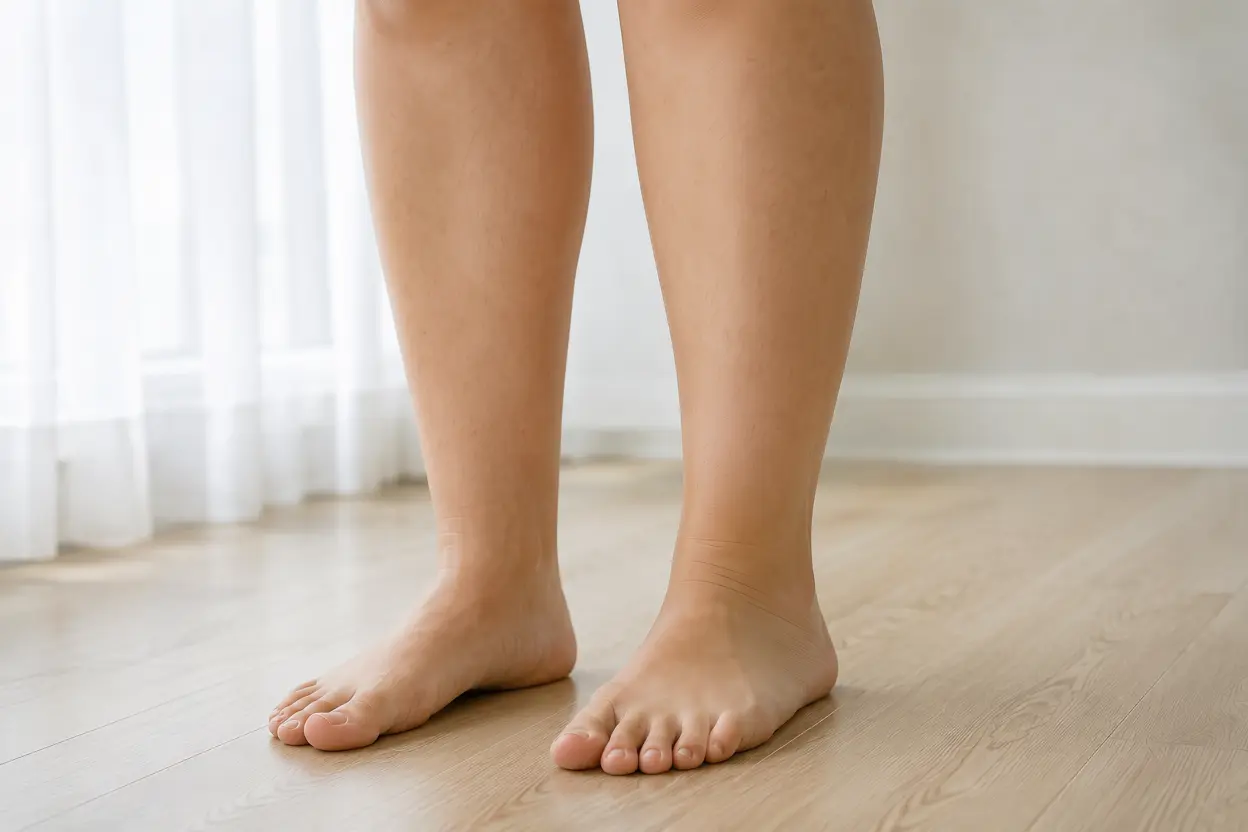

Quick answer: What causes cankles is usually one of two things: inherited body shape passed down through genetics, or fluid buildup from a medical condition such as venous insufficiency, heart failure, lymphedema, or hypothyroidism. Most cases are harmless and linked to family traits. Some cases signal a health issue that needs medical attention.
What Causes Cankles: A Quick Overview
Cankles happen when the calf blends into the ankle without a visible narrowing point. The word combines calf and ankle, and it describes appearance rather than a medical diagnosis. People search for what causes cankles because the look can stem from very different sources. Some people simply have a naturally wider ankle bone structure. Others develop swelling from fluid retention, poor circulation, or an internal health problem.
Understanding what causes cankles starts with knowing that there are two broad categories. The first is genetic, meaning the shape is inherited and permanent. The second is medical, meaning swelling builds up over time and can often be treated once the root cause is found.
Are Cankles Genetic? Understanding the Genetic Cause of Cankles
Yes, cankles genetic traits are common and often run in families. If a parent or grandparent has a similar leg shape, there is a strong chance the trait was passed down.
What Causes Cankles From Genetics
Genetic cankles form because of bone structure, fat distribution, and muscle shape. These traits are set before birth and stay fairly stable through life. A person with a naturally low calf muscle, a wider ankle bone, or a genetic tendency to store fat in the lower leg will often show this pattern from a young age, long before any health condition could develop.
This type of cankle is not a medical problem. It does not come with pain, warmth, redness, or one sided swelling. It looks the same on both legs and does not change much day to day.
How Family Body Shape Contributes to Cankles
Body shape is inherited much like height or eye color. Families that share a body type often share leg shape too. Some traits linked to genetic cankles include:
- A shorter distance between the calf muscle and the ankle bone
- A natural tendency to store fat in the lower leg
- Wider bone structure around the ankle joint
None of these traits point to a health risk. They explain why some people ask are cankles genetic after noticing the same leg shape in siblings or parents.
What Causes Cankles: Medical Conditions Behind Ankle Swelling
While genetics explain many cases, medical causes of cankles involve fluid buildup rather than natural shape. This type of swelling can appear suddenly, worsen throughout the day, or affect only one leg. Knowing what causes cankles from a medical standpoint helps people recognize when to see a doctor.
Venous Insufficiency as a Cause of Cankles
Venous insufficiency is one of the most common medical explanations for cankles cause complaints in adults. Veins in the lower leg carry blood back to the heart using one way valves. When these valves weaken, blood pools in the lower leg instead of moving upward. This pooling raises pressure in the veins and pushes fluid into surrounding tissue.
Signs of venous insufficiency include:
- Swelling that worsens by evening
- Aching or heaviness in the legs
- Visible varicose veins
- Skin discoloration near the ankle over time
Standing for long periods, pregnancy, older age, and a family history of vein problems all raise the risk of this condition.
Congestive Heart Failure and Cankles
Congestive heart failure is a more serious cause of cankles that needs prompt medical care. When the heart cannot pump blood efficiently, fluid backs up in the veins and leaks into nearby tissue, especially in the lower legs and ankles. This swelling is usually present in both legs and often comes with shortness of breath, fatigue, or a rapid heartbeat.
Anyone with sudden ankle swelling along with chest discomfort or breathing trouble should seek medical care right away, since this combination can point to a heart related cause of cankles rather than a cosmetic one.
Lymphedema: A Common Cause of Cankles
Lymphedema develops when the lymphatic system cannot properly drain fluid from the tissues. This system normally moves excess fluid, proteins, and waste out of the legs and back into the bloodstream. When lymph vessels are damaged, blocked, or underdeveloped, fluid builds up and causes persistent swelling.
Lymphedema can be present at birth in some individuals, or it can develop later from infection, surgery, injury, or cancer treatment that affects the lymph nodes. Unlike simple water retention, lymphedema swelling tends to stay firm and does not fully go down overnight, even after rest.
Hypothyroidism and What Causes Cankles in the Thyroid System
Hypothyroidism, or an underactive thyroid, can also explain what causes cankles in some people. The thyroid gland controls metabolism and fluid balance throughout the body. When thyroid hormone levels drop too low, the body can retain fluid and proteins in the skin and tissue, leading to a puffy or swollen appearance in the lower legs and ankles.
Other signs of hypothyroidism include fatigue, weight gain, dry skin, and feeling cold often. A simple blood test can confirm whether thyroid function is behind the swelling.
Lifestyle Factors That Cause Cankles
Beyond genetics and medical conditions, daily habits are also part of what causes cankles for many people.
Diet and Sodium Intake
A diet high in salt encourages the body to hold onto water, which can settle in the lower legs. Cutting back on processed foods and salty snacks often reduces mild swelling within a few days. This is one of the easiest lifestyle-related answers to what causes cankles to fix at home
Sedentary Habits and Standing Too Long
Sitting or standing in one position for hours slows blood flow in the legs. The calf muscles normally act as a pump that helps push blood upward. Without regular movement, fluid can pool near the ankle. Simple changes like walking breaks, ankle rotations, and leg elevation often ease this type of swelling. Poor circulation from inactivity is a frequently overlooked answer to what causes cankles in otherwise healthy adults.
Weight gain can also increase pressure on leg veins and lymph vessels, making swelling more noticeable over time, even in people whose base cause of cankles is genetic.
If lifestyle habits are contributing to swelling, simple changes may help. Learn more in our guide on how to get rid of cankles.
How to Know if What Causes Cankles Is Genetics or a Medical Issue
A few simple checks can help tell the two apart:
- Genetic cankles look the same on both legs and stay consistent over months or years.
- Medical swelling often changes throughout the day and may worsen with standing.
- Pain, warmth, redness, or one sided swelling usually points to a medical cause of cankles rather than genetics.
- Swelling that improves fully overnight is more likely fluid related than structural.
Comparing childhood photos to current leg shape can also help. If the shape has stayed the same since childhood, genetics is the more likely explanation. Here’s a quick way to tell them apart:
| Feature | Genetic Cankles | Medical Cankles |
| Cause | Inherited body shape | Fluid buildup from illness |
| Onset | Since childhood | Develops over time |
| Legs affected | Both, even | Often one-sided |
| Pain | None | Often present |
| Overnight change | None | May improve |
| Treatable | No | Often yes |
When to See a Doctor About Cankles
Once you understand what causes cankles in your case, you’ll know whether treatment is even necessary. Most people with genetic cankles never need treatment, since the shape poses no health risk. However, medical attention is important if swelling appears suddenly, affects only one leg, or comes with pain, warmth, redness, shortness of breath, or chest discomfort. These signs can point to blood clots, heart problems, or infection, all of which need prompt evaluation.
A doctor can run simple tests, including blood work for thyroid function, an ultrasound for vein health, or an exam for lymphatic function, to pinpoint the exact cause of cankles and recommend the right treatment path.

Summary: What Causes Cankles
What causes cankles usually comes down to genetics or an underlying medical condition. Genetic cankles are inherited, stable, and harmless, often shared among family members with a similar leg shape. Medical causes include venous insufficiency, congestive heart failure, lymphedema, and hypothyroidism, all of which involve fluid buildup rather than natural body shape. Lifestyle habits such as high salt intake, prolonged sitting, and limited movement can add to swelling in both cases. Paying attention to symptoms like pain, one sided swelling, or sudden changes helps determine whether the cause is genetic or medical, and when it is time to see a doctor.
During a medical evaluation, healthcare professionals usually review your symptoms, medical history, and whether the swelling affects one or both legs. Depending on the suspected cause of what causes cankles, they may recommend blood tests or an ultrasound to identify the underlying condition.
Frequently Asked Questions:
Are cankles genetic or caused by weight?
Cankles can be caused by either factor. Genetic cankles come from inherited bone and muscle structure and are not related to body weight. However, weight gain can add fat and pressure around the ankle, making the appearance more noticeable in people who already have a genetic tendency toward it.
Can cankles be a sign of a serious health problem?
Yes, in some cases. Sudden swelling, one sided swelling, or swelling with pain, warmth, or breathing trouble can point to venous insufficiency, heart failure, or a blood clot. These situations call for prompt medical evaluation rather than home treatment.
Do cankles go away with exercise or diet changes?
Genetic cankles do not go away with exercise or diet, since they reflect natural bone and muscle structure. Medical or fluid related swelling often improves with reduced salt intake, regular movement, leg elevation, and treatment of the underlying condition, such as thyroid therapy or compression for venous insufficiency.