FUT Hair Transplant: What to Know Before You Decide
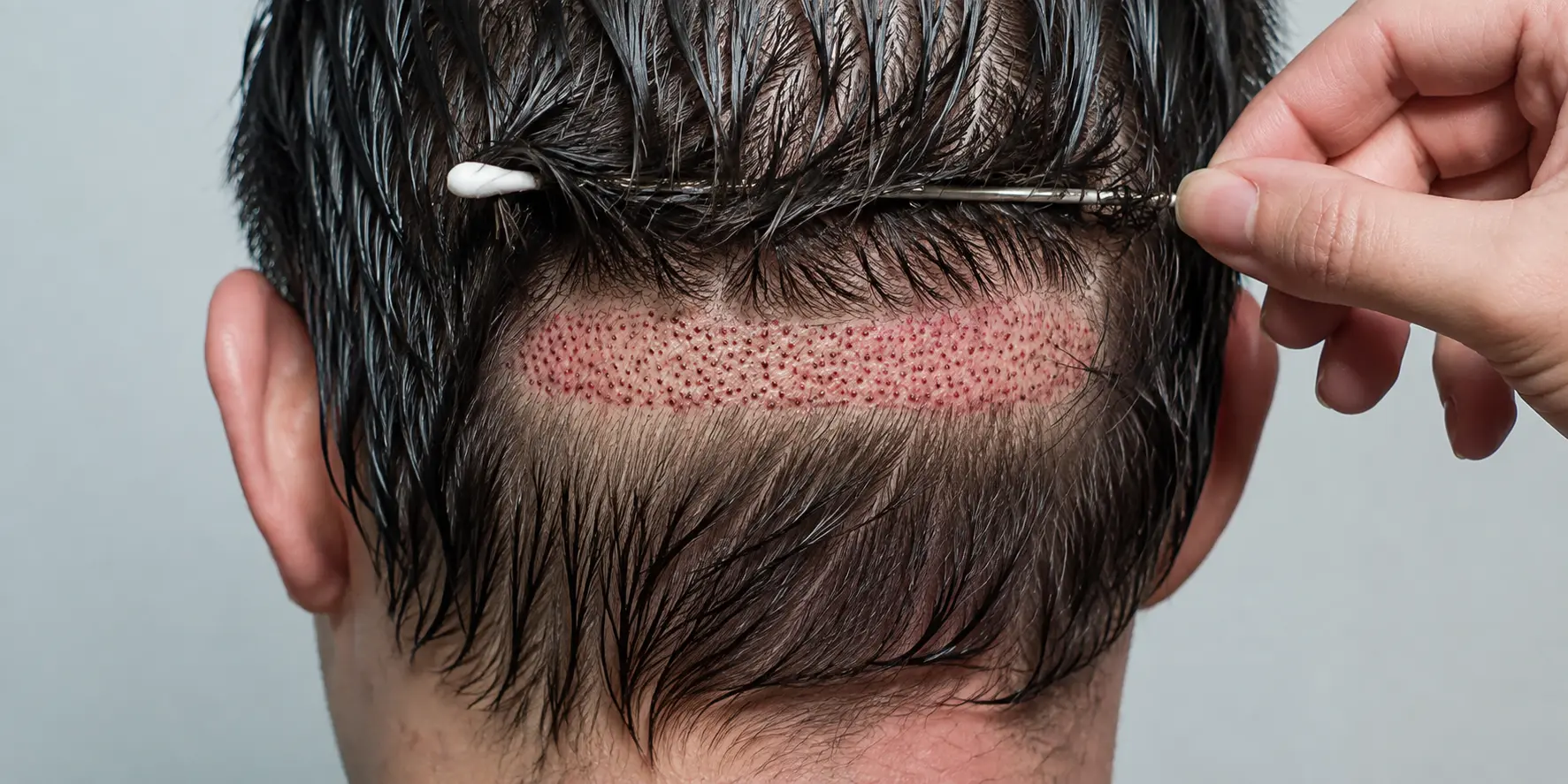
A FUT hair transplant removes a thin strip of scalp from the permanent donor zone at the back of the head, then divides that strip into individual follicular units for transplant into thinning or balding areas. It remains one of the two dominant hair restoration techniques today, valued for delivering a high graft count in a single session, at the cost of a single linear scar rather than the scattered dot scarring seen with FUE.
What Is a FUT Hair Transplant
FUT stands for follicular unit transplantation, a hair restoration technique that removes a strip of scalp and divides it into individual grafts under magnification. Hair on the scalp naturally grows in small clusters of 1 to 4 hairs called follicular units, along with their own sebaceous glands and tiny surrounding muscle. A FUT hair transplant takes advantage of this natural grouping. The surgeon removes a strip of tissue, typically 0.5 to 1.5 centimeters wide and up to 30 centimeters long, from the back of the scalp, then closes the wound with sutures or staples.
The density of follicular units across a normal scalp sits at roughly 1 unit per square millimeter, a fairly consistent number first documented in a 1994 study on refined micrografting technique. This matters more than it sounds, since it lets a surgeon calculate in advance roughly how many grafts a given strip size will yield, and plan the session accordingly.
FUT Scar Concealment Through Trichophytic Closure
The donor wound in a FUT hair transplant is not simply stitched shut. Many surgeons use a technique called trichophytic closure, trimming a thin sliver of tissue from one edge of the wound so that hair follicles at that edge can eventually grow directly through the healed scar. Done well, this makes the resulting line far less noticeable, even when the surrounding hair is worn short.
The FUT Procedure Step by Step
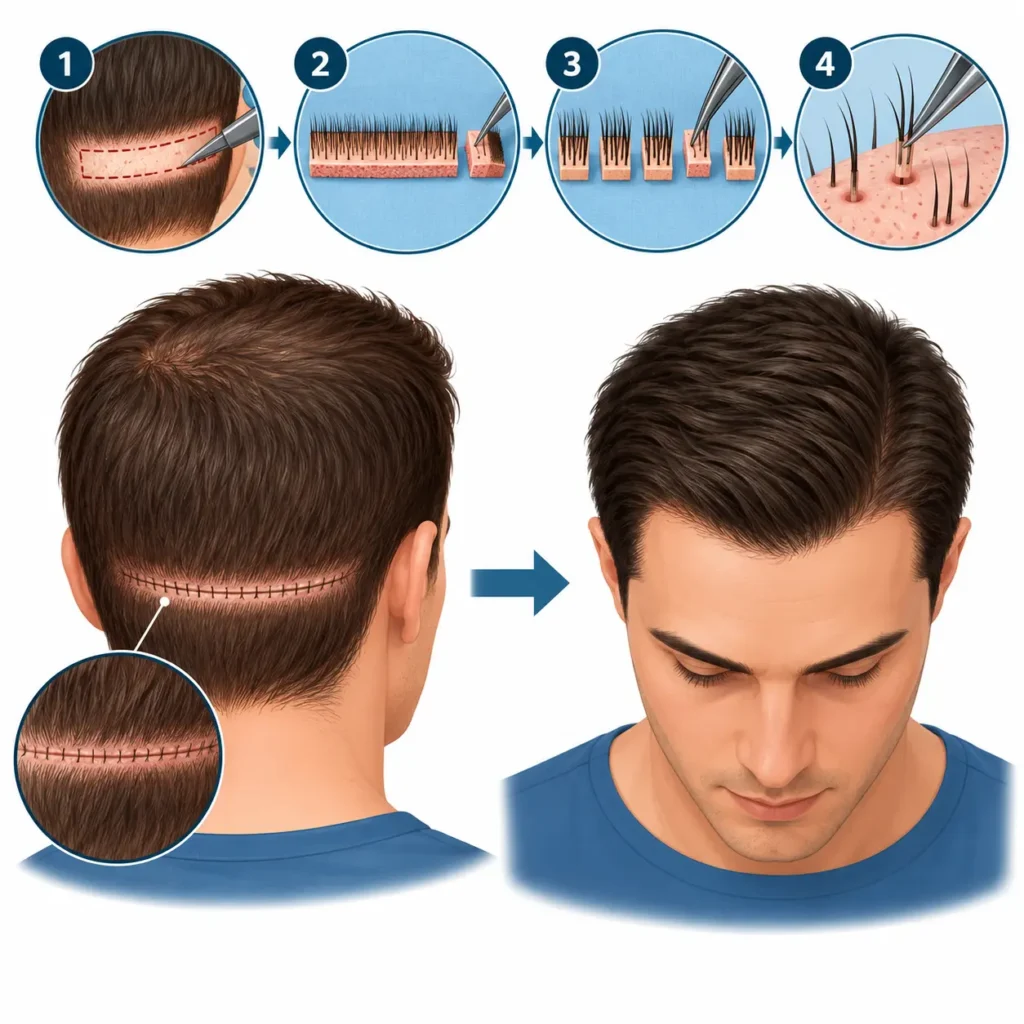
A FUT hair transplant generally follows the same core sequence regardless of clinic.
Step 1: Numbing the Scalp
The donor and treatment areas are numbed with local anesthesia, often alongside light oral or intravenous sedation to keep the injections comfortable throughout the procedure.
Step 2: Removing the Donor Strip
The surgeon removes a single strip of scalp from the permanent donor zone at the back of the head, then closes the wound, often using trichophytic technique to help the resulting scar stay thin.
Step 3: Dissecting the Strip Into Grafts
While the donor site is being closed, a separate technician team dissects the strip under a stereo microscope, first slivering it into thin rows, then separating each row into individual follicular units of 1 to 4 hairs each.
Step 4: Creating Recipient Sites
Tiny recipient incisions are made across the treatment area, angled and spaced to match the natural direction of the surrounding hair and the density needed for a natural result.
Step 5: Placing the Grafts
Each follicular unit is placed by hand into its recipient site, working from the hairline inward, with smaller single hair grafts typically placed at the front for a soft, natural edge.
FUT vs FUE Comparison
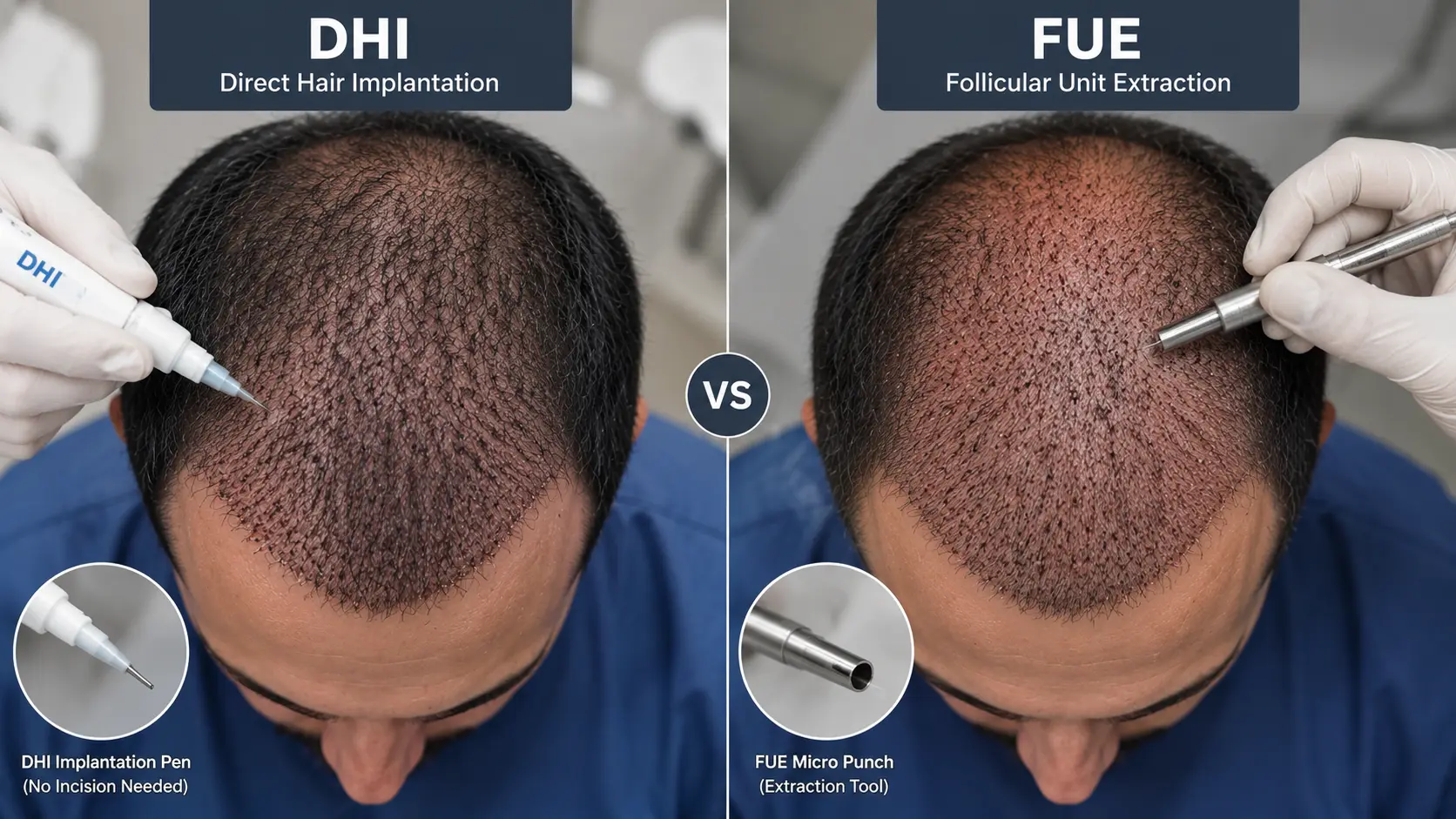
The two methods diverge entirely at the harvesting stage, and a full breakdown of FUE versus FUT covers graft quality and the transection research in more depth than a single table can. Here is the short version.
| Factor | FUT | FUE |
|---|---|---|
| Donor harvesting | One strip removed in a single motion | Individual follicles removed one at a time |
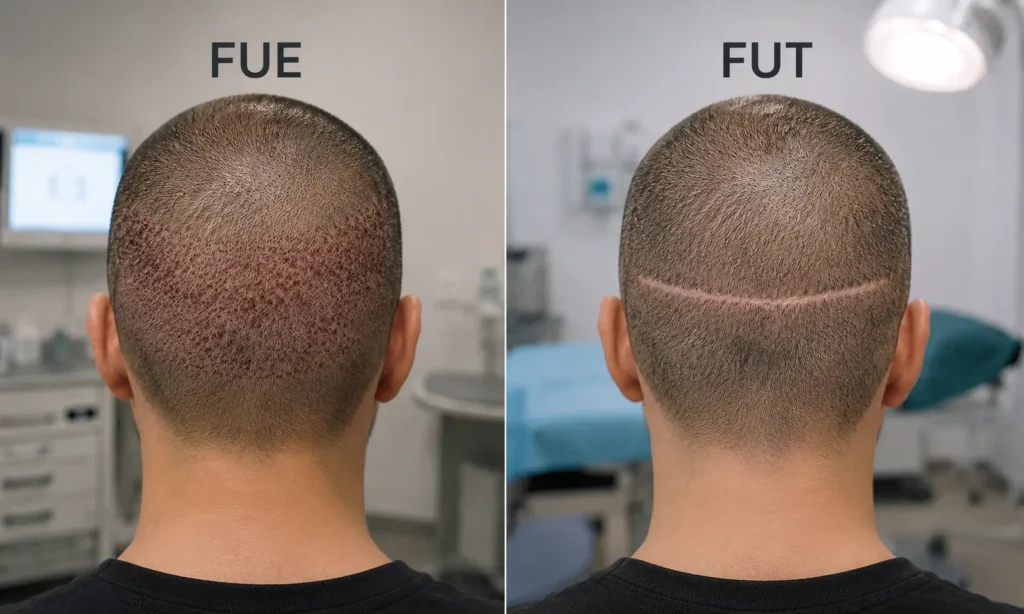
| Scarring | One linear scar | Small, scattered dot scars |
| Shaving required | Not required | Usually required in the donor area |
| Graft yield per session | Higher | More limited by extraction speed |
| Reported graft survival | Higher in several studies | Lower in several studies, more variable |
| Best suited for | Large sessions, advanced hair loss | Shorter hairstyles, smaller sessions |
However Both and FUE and FUT are advance technique for hair transplant and both play different job. That depend on patient which hair transplant he wants to choose. The most advance techinique is Sapphire FUE which is better than standard FUE and FUT.
What the Research Shows on Graft Survival
This is where FUT has a genuine, evidence backed advantage worth taking seriously. A comparative study by Beehner, cited in a peer reviewed review of hair transplant technique, found FUE grafts survived at 53.9 percent compared to 85.2 percent for FUT grafts taken from the same patients. The likely mechanical reason comes down to visibility during extraction. FUT grafts are dissected under direct microscopic view with the full strip in hand, while FUE extraction has been described as a blind procedure, since the surgeon cannot see the follicle’s angle beneath the skin while removing it, raising the risk of transection.
It is worth being honest that this evidence is not unanimous. A separate study by Tsilosani found FUE and FUT graft survival to be roughly equivalent. What this means practically is that FUT carries a stronger track record for graft survival in some research, but outcomes still depend heavily on the individual surgeon’s skill and technique, not the method label alone. The same transection risk shows up in discussions of implantation method too, since it traces back to how grafts are extracted in the first place, not how they are placed.
Who Is a Good Candidate for FUT
A few factors make FUT a better fit for some patients than others, based on reasoning from the International Society of Hair Restoration Surgery.
- Hair length: best suited for people who always wear their hair longer than an inch and do not mind avoiding a shave in the donor area
- Age: older patients often heal with a thinner, less visible scar than younger patients
- Extent of hair loss: a good fit for advanced hair loss, since a single strip can still be harvested efficiently even from a narrow donor zone
- Priorities: a strong option for anyone who values a higher graft count in one session over avoiding a linear scar
None of this means FUT is automatically the right choice for everyone in these groups, a proper consultation with an experienced surgeon still matters more than any general rule.
FUT Recovery and Scarring
Most patients have their sutures or staples removed within 10 to 14 days. Since the donor area is not shaved, it stays completely hidden by surrounding hair throughout recovery, unlike FUE where donor scabs remain visible for about a week. Transplanted hairs typically shed within the first few weeks after surgery, a temporary and expected phase, before new growth begins around month 3 or 4. Results continue to fill in and mature for up to 12 to 18 months. The resulting linear scar can be corrected later if needed, through re-excision, camouflage transplantation directly into the scar, or scalp micropigmentation.
Following the surgeon’s specific aftercare instructions matters more than any general recovery timeline. This includes any restrictions on exercise, since strenuous activity too soon can raise blood pressure at the donor site and affect healing or graft survival. If a surgeon recommends gentle walking during the first week and holding off on heavier workouts for several weeks after, that guidance should be followed exactly as given, since recovery details vary based on the individual procedure and the surgeon’s own clinical judgment.
FUT Advantages
FUT offers several genuine benefits that keep it a common choice despite the linear scar it leaves behind.
- Higher graft yield in a single session, since strip harvesting is faster than removing follicles one at a time
- No shaving required in the donor area, since the strip is hidden by surrounding hair immediately
- Stronger graft survival in several studies, likely due to the direct visibility surgeons have while dissecting under a microscope
- Lower cost per graft compared to FUE for a comparable graft count
- A single, well healed scar that can often be concealed with proper trichophytic closure
FUT Side Effects and Risks
Like any surgical procedure, FUT carries some real risks and temporary side effects worth knowing beforehand.
- Mild pain, swelling, or numbness around the donor area for several days after surgery
- A visible linear scar, which can widen or thicken in some patients, particularly with poor wound healing or repeated strip removals
- Temporary shock loss, where both transplanted and some surrounding native hairs shed before new growth begins
- A small risk of infection or minor bleeding at the incision site, as with any surgical wound
- Tightness or restricted scalp mobility in some patients, especially after larger strip removals
Most of these effects are temporary and improve within the first few weeks, though the scar itself is permanent, even when well concealed.
FUT Cost
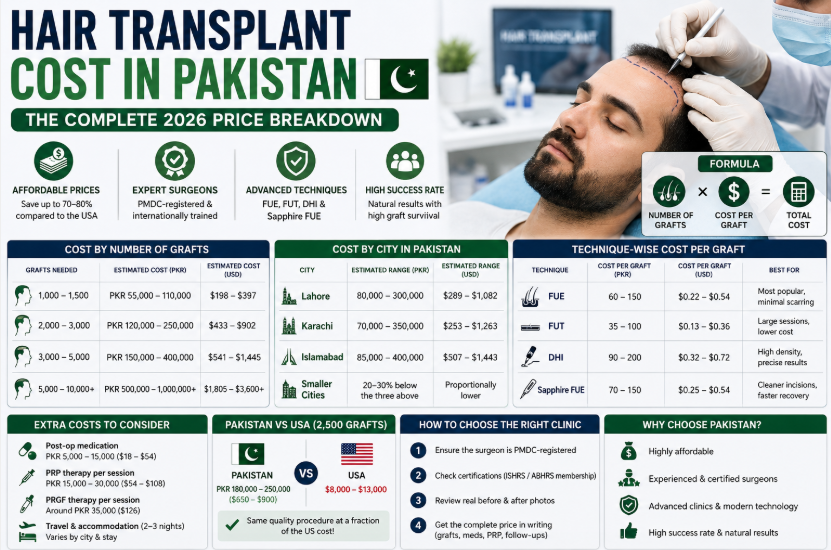
FUT typically costs $2 to $6 per graft in the United States, with a full procedure commonly totaling $4,000 to $10,000. This is generally lower than FUE cost for a comparable graft count, since strip harvesting takes less surgeon time than removing follicles one at a time.
Summary
A FUT hair transplant removes a single strip of donor scalp and divides it into individual follicular units, allowing a high graft count in one session at the cost of a linear scar rather than scattered dot scarring. Research on graft survival favors FUT in several studies, though not all, likely tied to the direct visibility surgeons have during microscopic dissection compared to blind extraction in FUE. It tends to suit patients who want to keep their hair long, who are further along in hair loss, or who are older, though a real consultation still matters more than any general rule. Recovery typically takes 10 to 14 days for suture removal, with visible growth beginning around month 3 or 4 and full results settling in over the following year.
Frequently Asked Questions
Does FUT leave a scar?
Yes, a single linear scar across the donor area. With trichophytic closure and proper technique, this scar can become quite thin and difficult to detect, even at shorter hair lengths.
Is FUT better than FUE?
Neither is universally better. FUT tends to offer a higher graft yield per session and, in some studies, better graft survival, while FUE avoids a linear scar and allows very short hairstyles. The right choice depends on hair loss extent, hairstyle preference, and individual candidacy.
How long does it take to recover from FUT?
Most patients have sutures removed within 10 to 14 days and return to light activity within a few days of surgery. Visible hair growth usually begins around month 3 or 4, with full results developing over 12 to 18 months.
References
- Sharma R, Ranjan A. Follicular Unit Extraction (FUE) Hair Transplant: Curves Ahead. Journal of Maxillofacial and Oral Surgery, 2019.
- International Society of Hair Restoration Surgery. FUT Hair Transplant: Benefits, Procedure and Recovery.
- Limmer BL. Elliptical Donor Stereoscopically Assisted Micrografting as an Approach to Further Refinement in Hair Transplantation. Dermatologic Surgery, 1994.
Disclaimer: This article is based on peer reviewed medical literature and hair restoration medical sources, offering a technically accurate look at FUT hair transplant surgery for general informational purposes only. It is not a substitute for professional medical advice.