Written by Sajid, Health Content Researcher
Researched from clinical literature and medical guidance to help you understand pregnancy related swelling, what is normal, and what needs medical attention. For informational purposes only, not a substitute for professional medical advice.
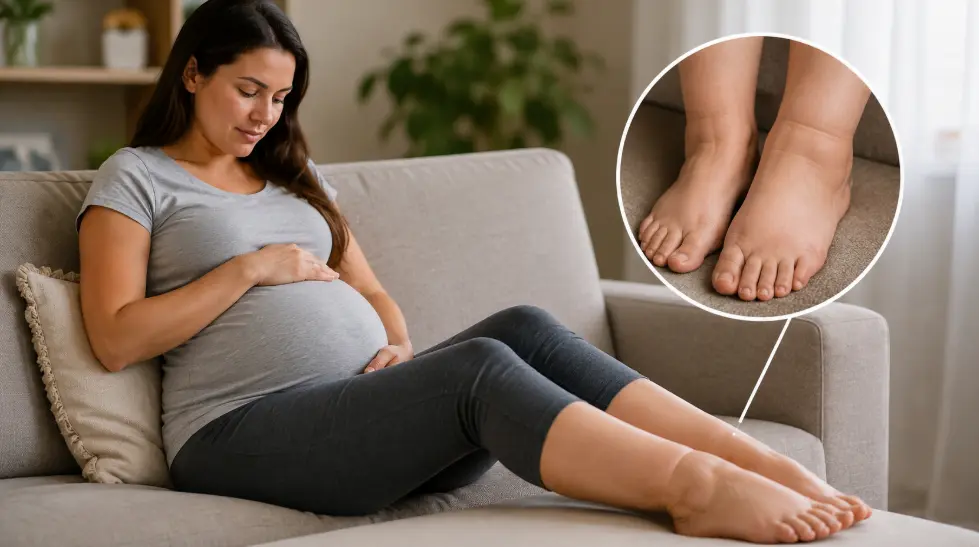
Pregnancy cankles happen when the ankle and calf swell together and lose their natural shape, usually from fluid buildup in the lower legs. This is one specific version of the broader question of what causes cankles, and it is one of the most common changes women notice, especially in the third trimester. Most of the time it eases with rest and a few daily habits. Occasionally, though, it can be your body flagging something that needs a doctor’s attention, so knowing the difference matters.
What Are Pregnancy Cankles
The word cankles simply describes the ankle and calf blending into one shape, with no visible curve at the joint. During pregnancy, this usually comes from fluid retention rather than weight gain on its own. The skin can look tight or shiny, and shoes that fit fine early on may feel snug by the second half of pregnancy. Swelling tends to build across the day, looking closer to normal in the morning and puffier by evening, and it usually shows up in both legs rather than just one.
Why This Happens During Pregnancy
A few things happen at once, and none of them are within your control.
Fluid Retention
Your body holds onto more water during pregnancy to support amniotic fluid, the placenta, and a larger blood supply. Gravity pulls a good share of that fluid down into the feet, ankles, and calves, which is why swelling tends to be worst by the end of the day.
Hormonal Changes
Progesterone relaxes the walls of blood vessels, which lets fluid slip out of small veins more easily and settle into nearby tissue. A related hormone called relaxin loosens the tendons and ligaments in your feet to help your pelvis open for delivery, and that same loosening can let your feet widen and flatten slightly, adding to the puffy look.
Increased Blood Volume
Blood volume climbs by close to 50% during pregnancy to keep the baby supplied with oxygen and nutrients. That extra volume puts more pressure on leg veins, pushing fluid toward the ankles as pregnancy goes on.
Reduced Circulation
As the uterus grows, it presses on the large veins carrying blood back up from the legs to the heart, slowing circulation. This is part of why swelling tends to get worse in hot weather or after a long day standing.
Who Notices It Most
Nearly everyone dealing with pregnancy has some leg swelling, but a few things make it more noticeable. Carrying twins or multiples means more fluid and a bigger blood volume. Jobs involving hours of standing or sitting without a break raise the risk too, since there is less chance for blood to circulate normally. Hot, humid weather widens blood vessels and lets more fluid escape into tissue, and if you had swelling or varicose veins in an earlier pregnancy, it often shows up again.
A few everyday factors can make mild swelling worse without causing it outright: a diet heavy in sodium or processed food, not drinking enough water, tight socks or waistbands that restrict circulation, long stretches without moving, and extra weight carried before or during pregnancy.
When It Typically Starts
First Trimester
Swelling this early is uncommon, since blood volume and fluid levels are just starting to rise. If it does show up this early, it is worth mentioning at your next appointment since it is less likely to be pregnancy related.
Second Trimester
Things usually start to shift around month 4 or 5. Warm weather, a job that keeps you on your feet, and a salty meal can all bring it on sooner than expected.
Third Trimester
This is when swelling is most common and most noticeable, since the uterus is at its largest and blood volume has peaked. Many women notice their ankles look better in the morning, worse by dinner, and puffy again the next afternoon.
Normal Swelling or a Warning Sign
Most of the time, this kind of swelling is a normal, temporary part of pregnancy. But sudden or severe swelling can occasionally be an early sign of preeclampsia, a serious condition involving high blood pressure, according to the American College of Obstetricians and Gynecologists.
| Feature | Normal Pregnancy Swelling | Possible Preeclampsia Warning Sign |
|---|---|---|
| Onset | Gradual, over days or weeks | Sudden, within a day or two |
| Location | Both feet and ankles | Face, hands, and legs together |
| Pattern | Worse by evening, better after rest | Does not improve with rest |
| Other symptoms | None | Headache, vision changes, upper belly pain, heartburn that does not resolve with antacids, nausea or vomiting, feeling very unwell |
| Blood pressure | Normal | Often elevated |
If swelling shows up alongside any of the symptoms in that second column, do not wait it out. Call your provider the same day.
What Actually Helps
A handful of daily habits, backed by real clinical guidance, make a genuine difference for most women.
Staying off your feet is the simplest place to start. Avoid standing for long stretches, and when you can, lie down with your legs raised or sit with your feet up. While seated, bend and stretch each foot up and down 30 times, then rotate your ankles in a circle 8 times in each direction. These small movements keep blood moving and can noticeably ease stiffness, according to Mayo Clinic.
Sleeping on your left side helps too, since it takes pressure off the inferior vena cava, the large vein that returns blood from your lower body to your heart. Propping your legs up slightly with pillows while you sleep adds to the effect.
Compression stockings support circulation throughout the day, and standing or walking in a pool can help by compressing tissue in the legs, giving some temporary relief. Cold compresses or a short soak in cool water can also ease tight, achy swelling when it flares up.
Hydration and Diet
Cutting back on water when you are swollen sounds logical, but it works against you. Staying hydrated signals your body to release stored fluid instead of holding onto it. A typical recommendation during pregnancy is about 10 cups, or 2.3 liters, of fluids a day. Cutting back on salty, processed food and canned soups lightens the load on your ankles, and potassium rich foods like bananas, sweet potatoes, and leafy greens help your body balance fluid levels naturally. Talk to your provider before making major dietary changes or taking any supplements during pregnancy.
Complementary Approaches Worth Knowing
Some pregnant women find relief through manual lymphatic drainage, a gentle massage technique aimed at supporting fluid movement through the lymphatic system. Evidence specifically for pregnancy swelling is limited, so treat it as a possible complement to the habits above, not a replacement, and check with your provider before booking a session, especially early in pregnancy.
Clothing and Footwear
Loose, breathable clothing lets blood move more freely than tight leggings or narrow boots. Supportive, properly fitted shoes take pressure off swollen feet, and flats with good arch support usually beat heels once swelling sets in.
When to Call Your Doctor
Occasional swelling is normal, but a few signs deserve a same day call, since they can point to a blood clot or preeclampsia rather than ordinary pregnancy swelling.
- Sudden or severe swelling appearing within a day or two
- Swelling in only one leg, especially with pain or warmth, which Mayo Clinic notes can point to a blood clot called deep vein thrombosis
- Swelling alongside a headache, vision changes, or upper belly pain
- Heartburn that does not go away with antacids, or feeling very unwell
- Any swelling that shows up very early in pregnancy without a clear cause
If you are unsure whether what you are seeing crosses into dangerous territory, it is always reasonable to call and ask rather than wait it out.
Does It Go Away After Birth
Yes, for most women the swelling clears within 1 to 2 weeks after delivery, as the body sheds the extra fluid through increased urination and sweating. It can linger a bit longer after a cesarean or a delivery involving a lot of IV fluids, but it should keep improving steadily. If swelling is still noticeable several weeks postpartum, mention it at your checkup to rule out an unrelated circulation issue.
Summary
Pregnancy related swelling comes from fluid retention, hormonal shifts, higher blood volume, and slower circulation in the legs. It usually shows up in the second trimester, peaks in the third, and fades within a couple of weeks after birth. Elevating your legs, staying hydrated, sleeping on your left side, and wearing supportive shoes and compression stockings help most women manage it day to day. Providers mainly watch how quickly swelling develops, since sudden or severe swelling can point to preeclampsia rather than the ordinary version most people experience. If you are trying to understand whether your cankles are genetic or swelling related beyond pregnancy, that distinction is worth exploring separately once the swelling resolves.
Frequently Asked Questions
How to reduce swelling in ankles and feet during pregnancy?
Elevating your legs, wearing compression stockings, staying hydrated, and moving regularly instead of standing or sitting for long stretches are the most effective daily habits. Sleeping on your left side and using cold compresses can also help when swelling flares up.
When do ankles swell in pregnancy?
Swelling can start as early as the second trimester, around month 4 or 5, but it is most common and most noticeable in the third trimester, when blood volume and pressure on the leg veins peak.
What exercises can I do to reduce leg swelling during pregnancy?
Bend and stretch each foot up and down 30 times, then rotate your ankles in a circle 8 times in each direction while seated. Walking, swimming, or standing in a pool can also help keep fluid from building up.
References
- American College of Obstetricians and Gynecologists. Preeclampsia and High Blood Pressure During Pregnancy.
- Mayo Clinic. Ankle Swelling During Pregnancy: What Helps.
- Mayo Clinic. Preeclampsia: Symptoms and Causes.
Last updated: 16 August 2026