FUE vs FUT: Which Hair Transplant Is Right for You
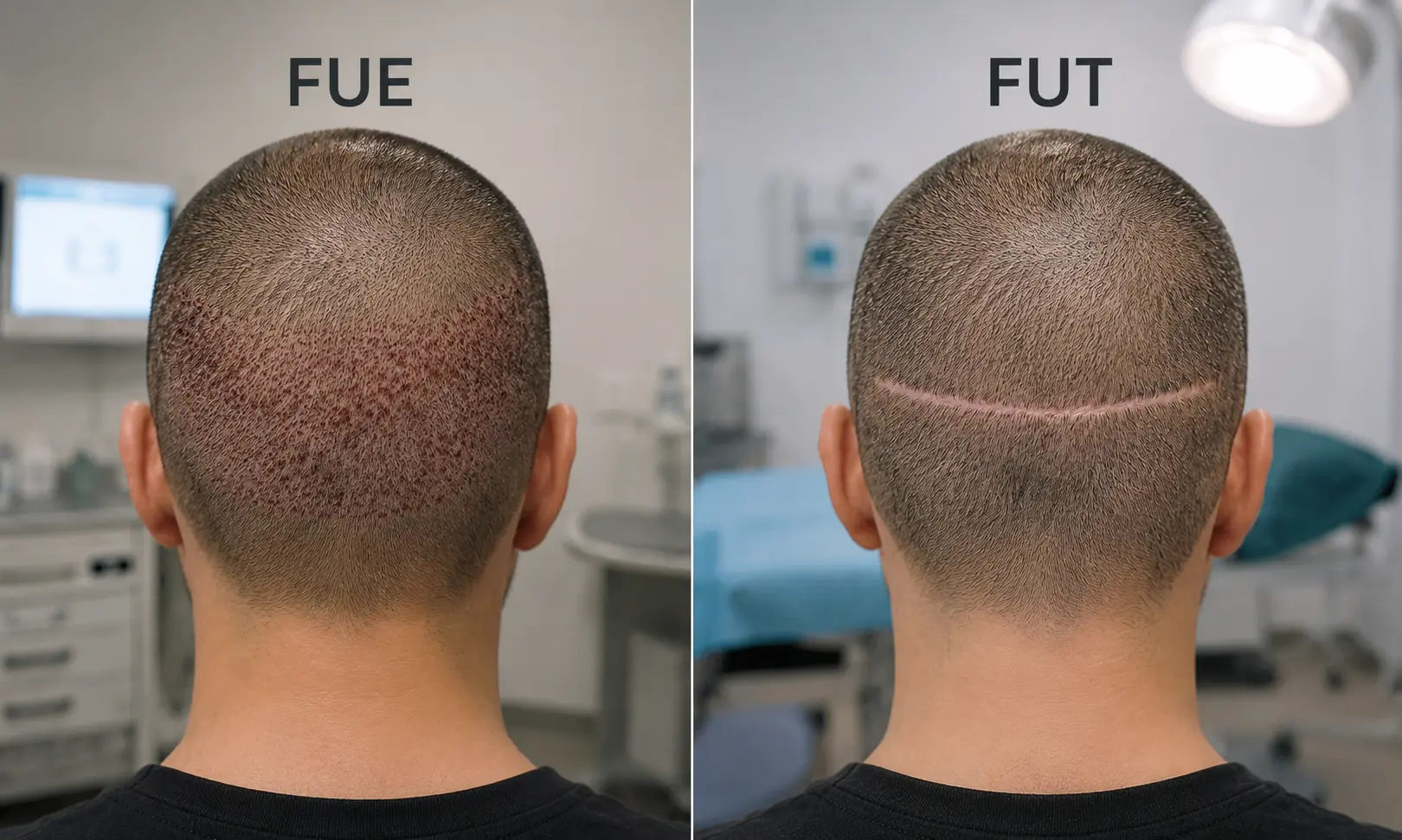
FUE vs FUT comes down to one core difference. FUE removes individual hair follicles one at a time, leaving tiny round scars, while FUT removes a thin strip of scalp and separates it into grafts under a microscope, leaving one thin line scar. Both methods produce permanent, natural looking results when done correctly. The right choice depends on how much hair you need, how you wear your hair, and how much scarring you are willing to accept.
What Is the Real Difference Between FUE and FUT
The FUE vs FUT debate mostly comes down to harvesting, not the actual hair placement. Both methods implant follicles into the scalp the exact same way, one graft at a time, placed by hand to match your natural hair direction and density. The difference is entirely in how those grafts are collected from the donor area at the back and sides of the head.
How FUE Extracts Hair
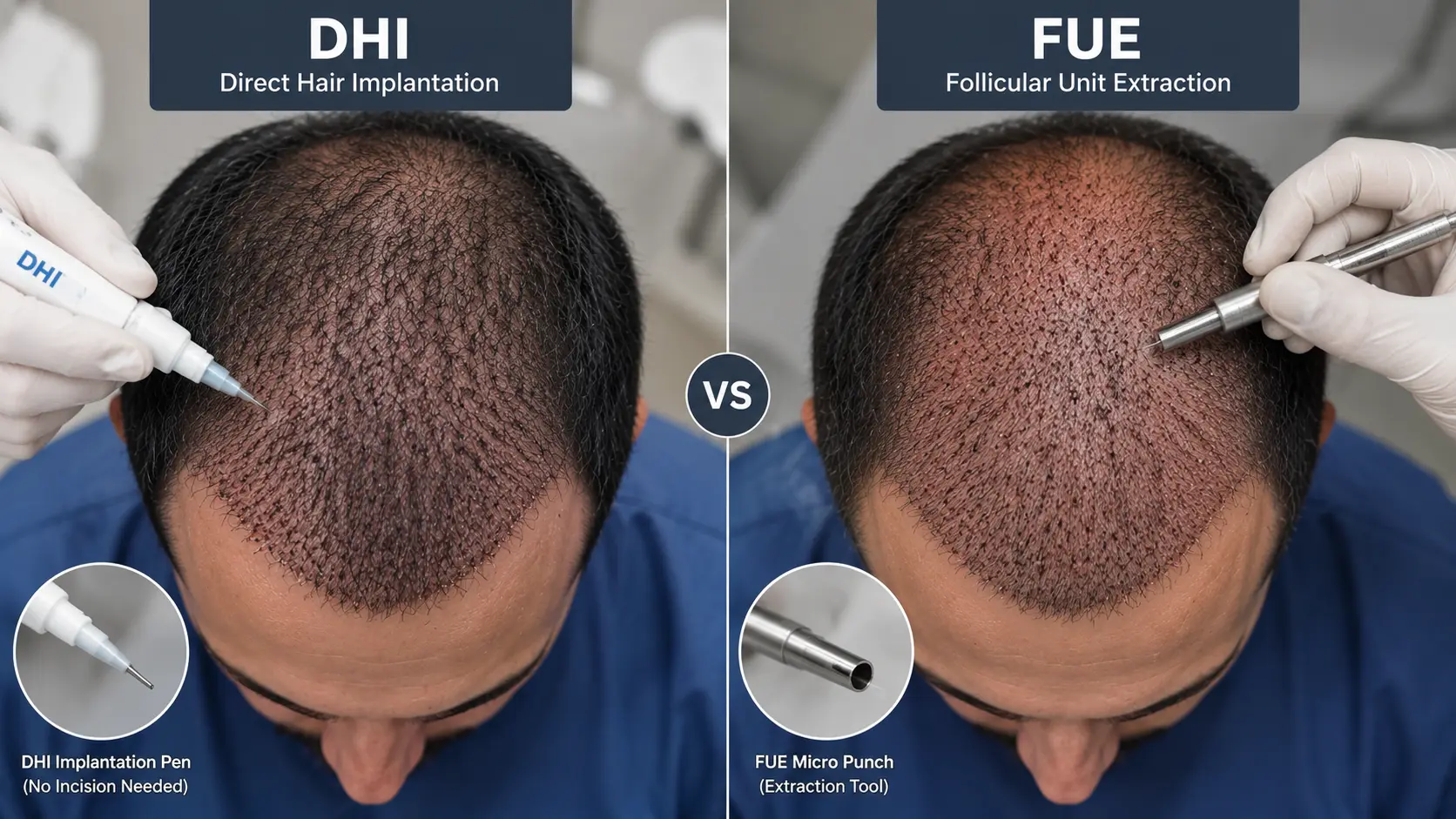
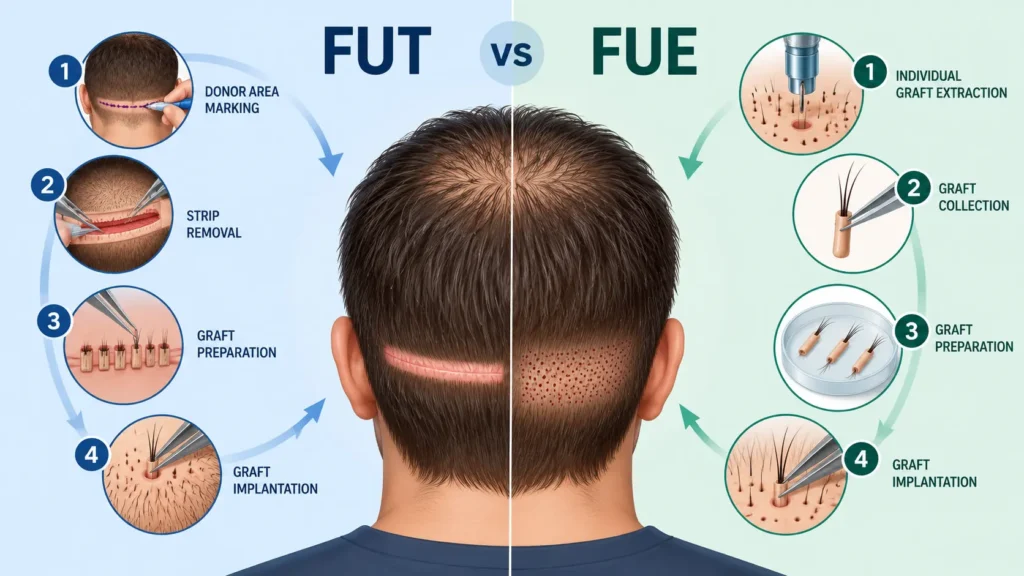
FUE stands for follicular unit extraction. A surgeon uses a small handheld tool called a micro punch, a hollow cylindrical device usually less than 1 millimeter wide, to remove individual follicles directly from the scalp, one at a time. This tool can be operated manually, motorized, or by a robotic system, but the basic extraction principle stays the same. This leaves small, round scars spread across a wider area, but no single visible line. Most people can return to normal activity within a few days, and the tiny scars are easy to hide even with short hair.
How FUT Extracts Hair
FUT stands for follicular unit transplantation. A surgeon uses a scalpel to remove a thin strip of scalp from the donor area, then closes the wound with stitches. Technicians then separate that strip into individual grafts using a stereo microscope, which allows precise dissection without damaging the follicles. This leaves one fine line scar rather than many small ones, and it typically takes about 10 days for the stitches to come out, according to Cleveland Clinic.
FUE vs FUT Comparison Table
| Factor | FUE | FUT |
|---|---|---|
| Extraction method | Individual follicles removed one by one | Strip of scalp removed, then divided into grafts |
| Scarring | Small round scars, spread out | One thin line scar |
| Recovery time | A few days | One to two weeks |
| Shaving required | Donor area only | Usually no shaving needed |
| Graft yield per session | Lower | Higher |
| Cost per graft | Higher | Lower |
| Best suited for | Shorter hairstyles, smaller sessions | Larger sessions, maximum density |
Graft Quality and Transection Risk
This is one of the most overlooked parts of the FUE vs FUT decision. In FUT, technicians separate grafts under a microscope with the full strip in view, so the follicles usually stay intact with their protective tissue layer around them. In FUE, the surgeon can only see the top of the follicle while extracting it, since the angle beneath the skin is hidden. This raises the chance of transection, meaning the follicle gets cut or damaged during removal. One published review found graft survival rates as low as 53.9% with FUE compared to 85.2% with FUT in a comparative study, according to research summarized in the National Library of Medicine, though other studies have found the two methods much closer when performed by an experienced surgeon. Newer punch technology and robotic systems have narrowed this gap significantly, but it has not been fully closed. However DHI “Direct Hair Implantation” is also advanced hair transplant technique.
Why the Donor Zone Location Matters
Not all donor hair is equally permanent. The middle portion of the donor area at the back of the head tends to resist balding for life, while hair from the upper and lower edges of that zone is more likely to thin out later, even after being transplanted, according to research discussed by the International Society of Hair Restoration Surgery. FUT naturally pulls from this safer middle zone alone, since the strip is removed from one consistent, targeted area. FUE requires harvesting from a wider region to collect enough grafts, which means some follicles may come from less permanent areas. This does not make FUE a poor choice, but it is a real factor worth understanding before committing to a large session.
Can You Combine FUE and FUT
Yes, and many surgeons consider this a smart long term strategy. A common approach uses FUT first, since it delivers the highest graft yield from the safest donor zone. Once the scalp becomes too tight for another strip removal, or if a wider donor scar needs to be camouflaged, FUE can be used for later sessions. Combining both methods lets a surgeon use the highest quality grafts first while keeping future options open.
FUE vs FUT: Which One Fits Your Situation
The right method depends on how much hair you need, your scalp’s elasticity, and how you plan to wear your hair going forward.
Who Should Choose FUE
FUE tends to fit people who want to keep their hair very short, want a faster recovery, or are having a smaller session. It also works well for people who are not good candidates for a strip removal due to tight or inelastic scalp skin.
- Prefers short hairstyles
- Wants minimal visible scarring
- Needs a shorter recovery period
- Has a smaller area of hair loss
Who Should Choose FUT
FUT tends to fit people who need a large number of grafts in one session, want the highest possible density, or are not concerned about keeping their hair extremely short in the future.
- Needs extensive coverage in one session
- Wants the highest graft yield per procedure
- Has good scalp elasticity
- Is comfortable with a single linear scar
Cost Differences Between FUE and FUT
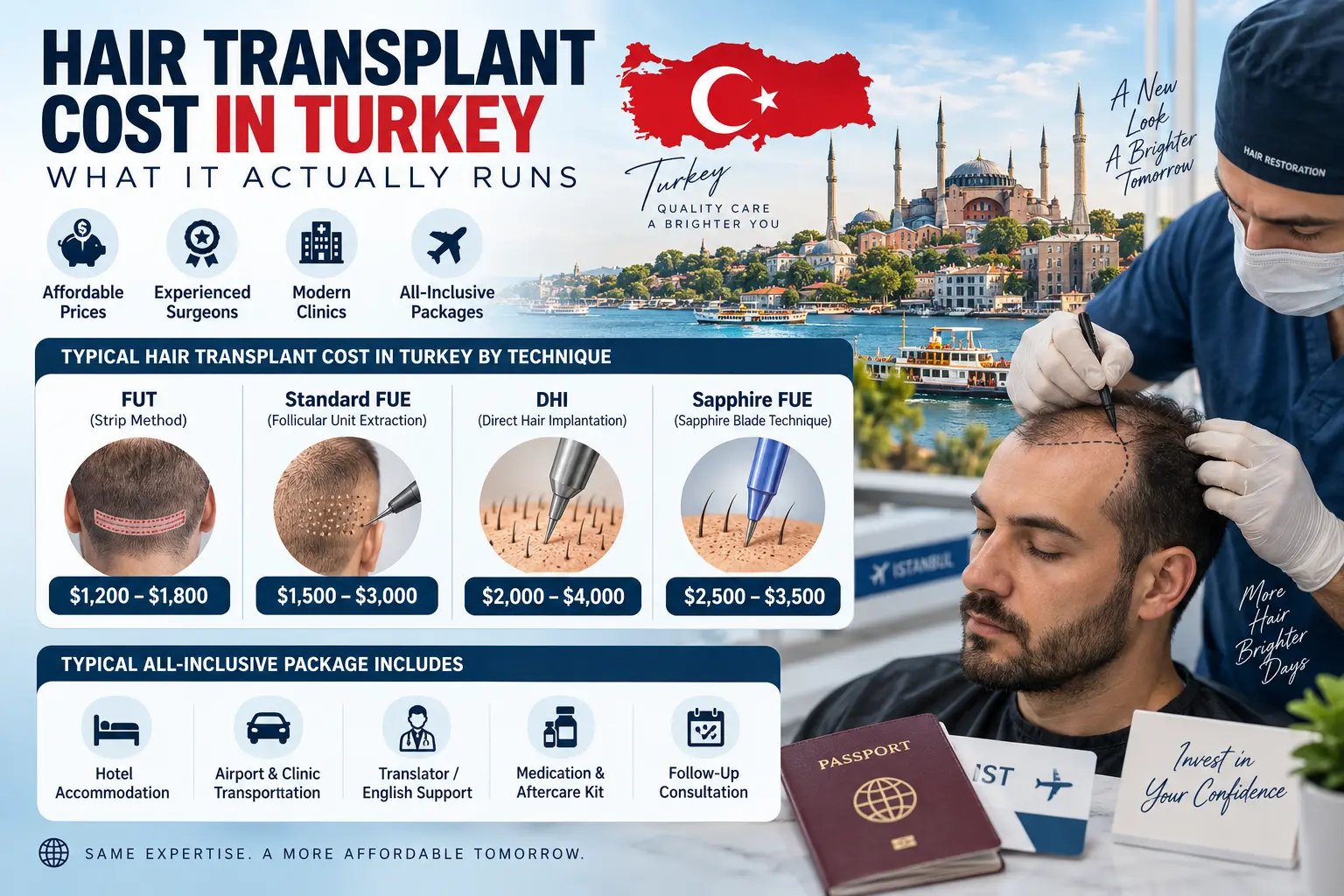
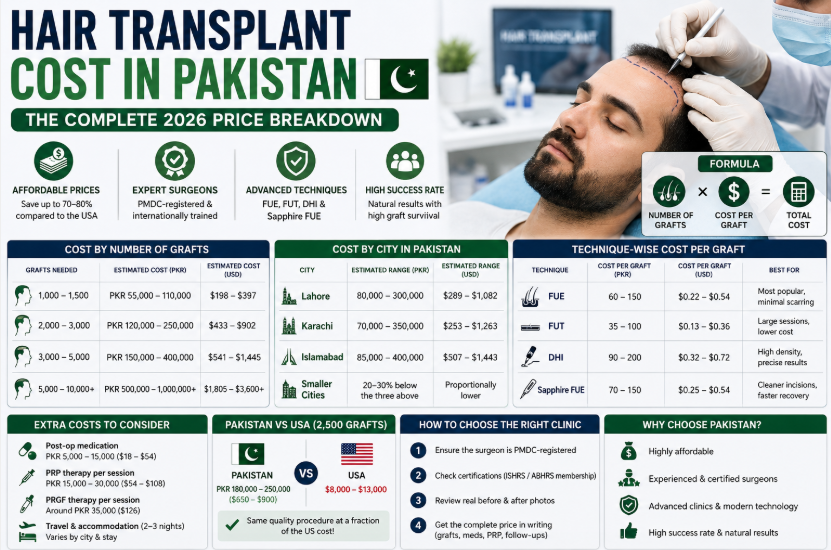
FUE typically costs more per graft, since it is a slower, more labor intensive process that requires specialized tools and more surgeon time. FUT usually costs less per graft, making it a more cost effective option for people who need a large number of grafts in a single session. Total cost still depends on the number of grafts needed, the clinic, and the surgeon’s experience, not just the method itself, and real FUE cost and recovery figures vary accordingly.
Summary
FUE vs FUT really comes down to how the grafts are harvested. FUE removes follicles individually, leaving small scattered scars and a faster recovery, while FUT removes a strip of scalp for a higher graft yield and a single line scar. FUE carries a slightly higher risk of graft damage during extraction, while FUT relies on the safest part of the donor zone but leaves a longer recovery. Many surgeons combine both methods across multiple sessions to get the best results. The right choice depends on the extent of hair loss, desired hairstyle, and how much scarring a person is comfortable with.
Frequently Asked Questions
Which is better, FUE or FUT transplant?
Neither method is better overall. FUE suits people who want less visible scarring and a faster recovery, while FUT suits people who need a higher graft yield in a single session. The better option depends on individual hair loss and goals.
Would I look normal 10 days after FUE?
Most people look close to normal by then. Redness and small scabs in the donor and recipient areas usually fade within 7 to 10 days, and the tiny extraction marks are easy to hide even with short hair. Transplanted hairs typically shed within a few weeks before new growth begins later on.
Which is more expensive, FUE or FUT?
FUE typically costs more per graft because it takes more time and specialized equipment to extract each follicle individually. FUT is generally more cost effective for people who need a large number of grafts.
References
- Cleveland Clinic. Hair Replacement Surgery.
- National Library of Medicine, PubMed Central. Follicular Unit Extraction (FUE) Hair Transplant: Curves Ahead.
- International Society of Hair Restoration Surgery. FUE vs FUT and Maximizing the Hair Graft.
Disclaimer: This article is based on clinical literature and hair restoration medical sources, offering a complete comparison of FUE and FUT for general informational purposes only. It is not a substitute for professional medical advice.