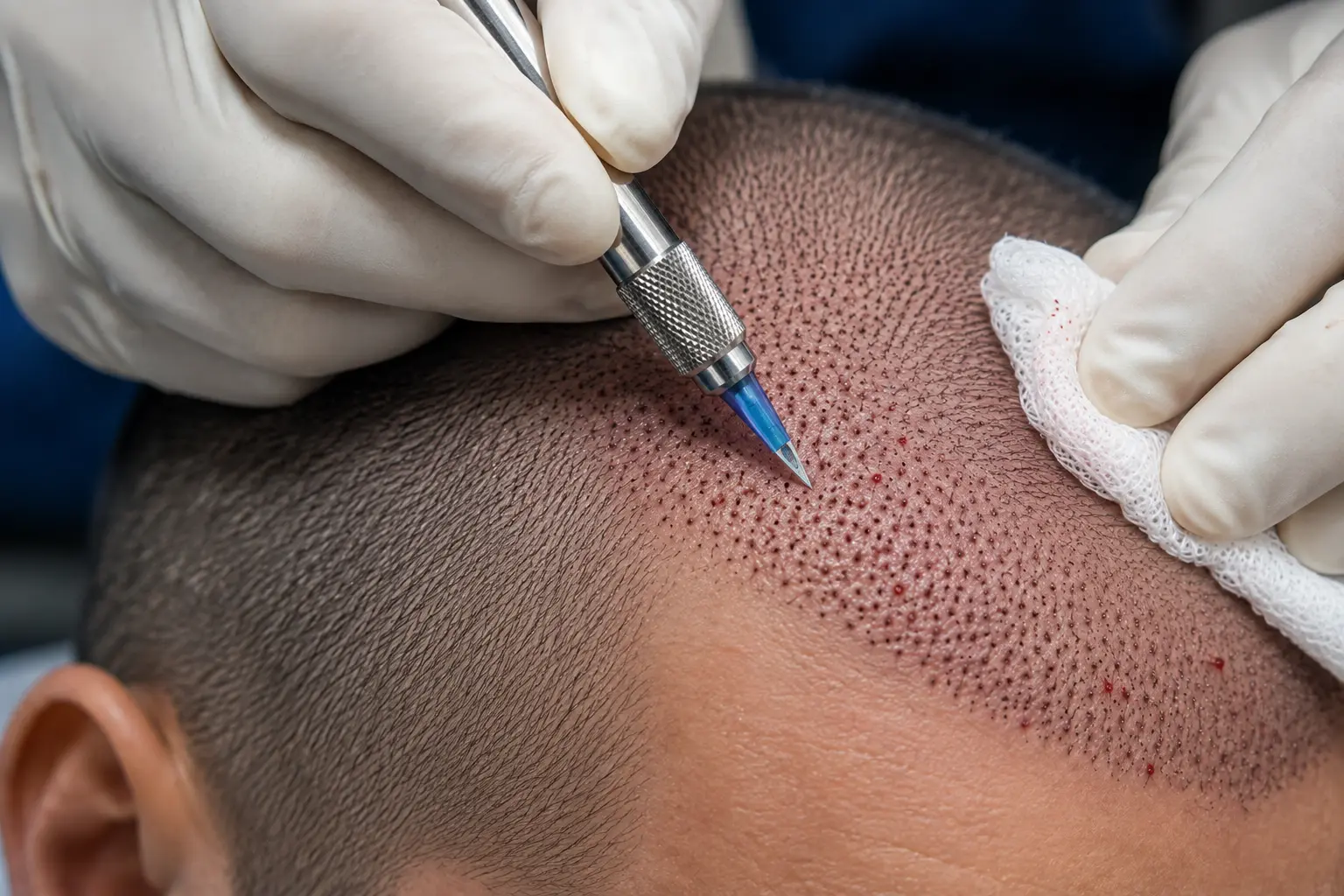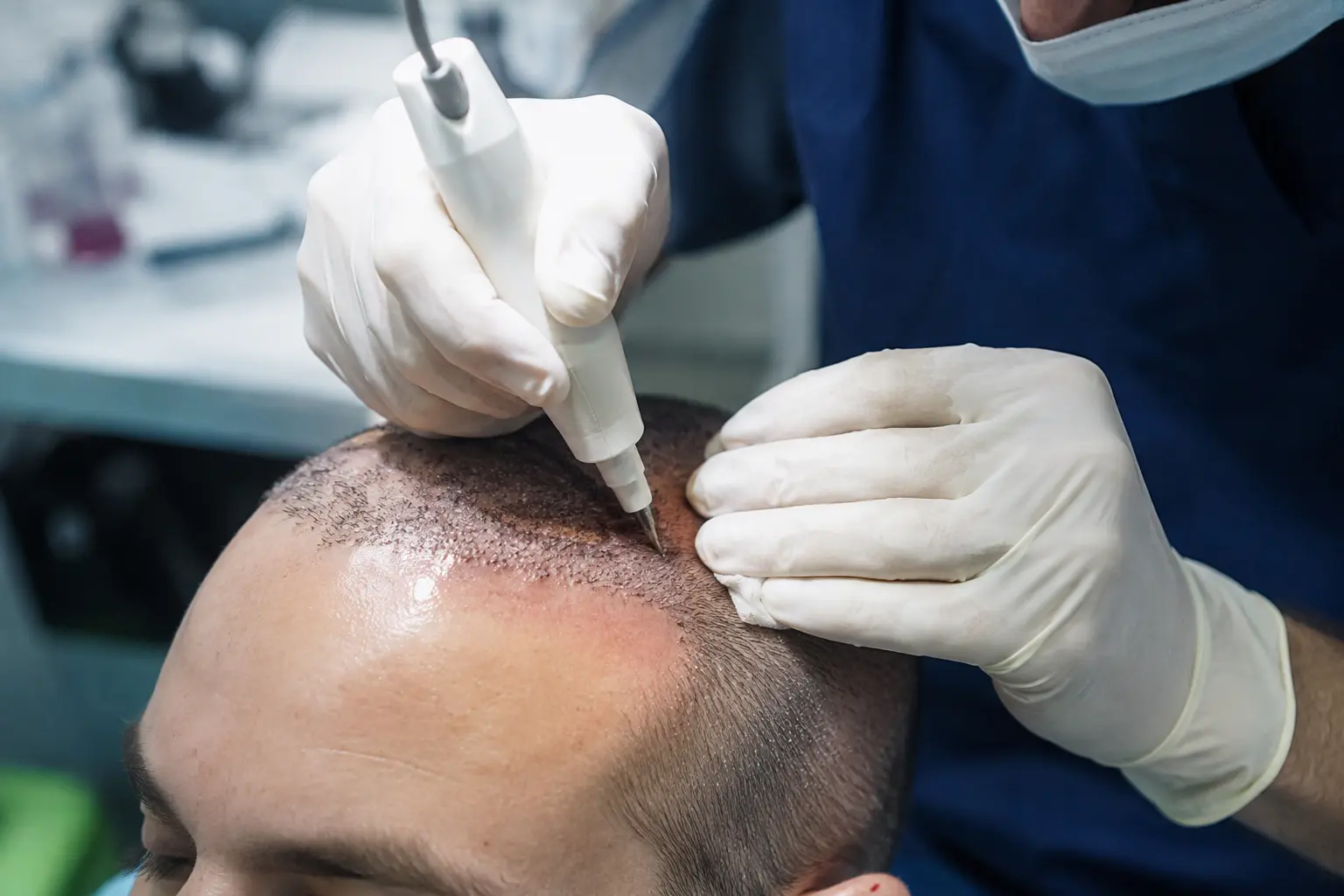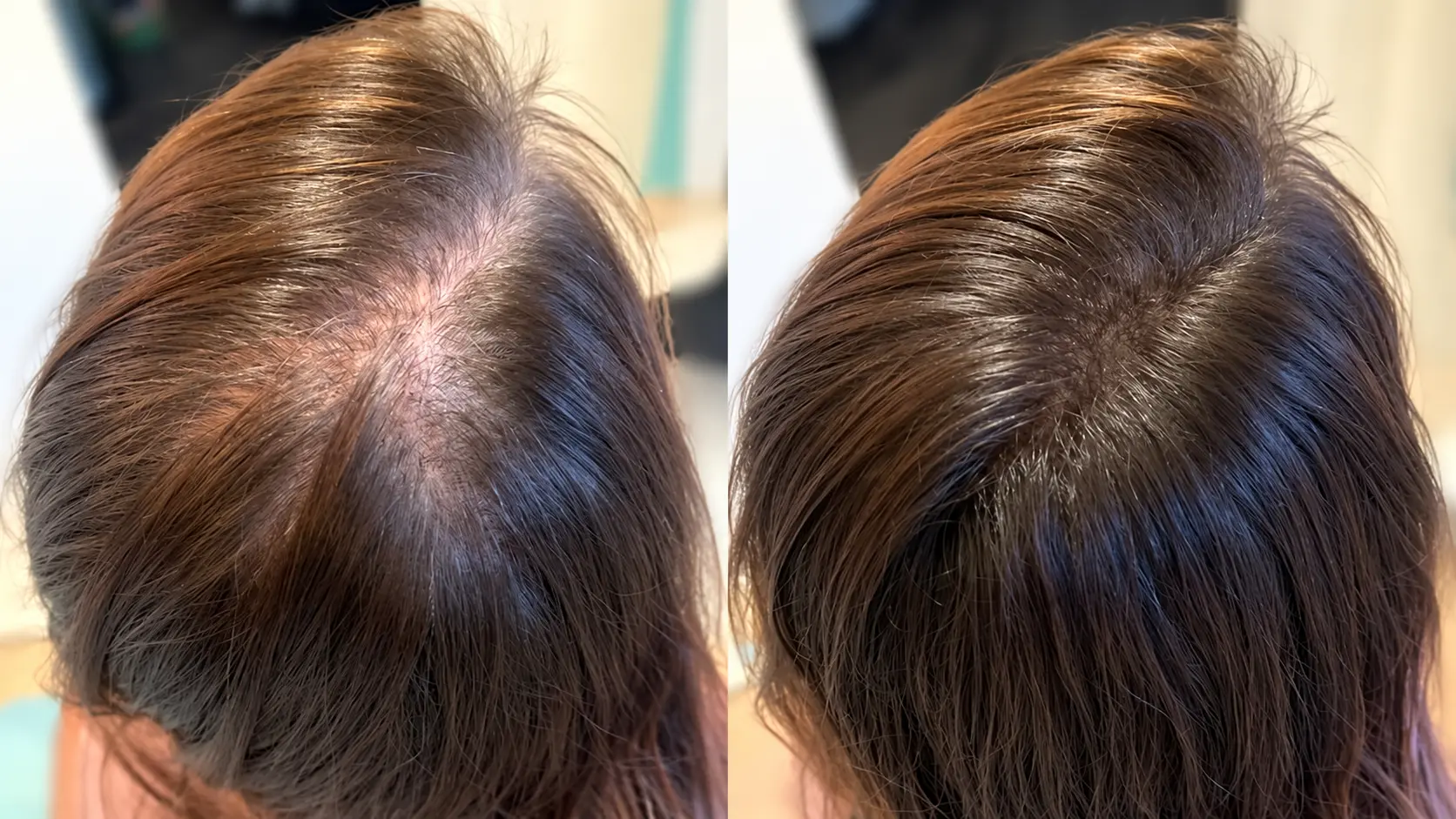
Hair transplant for women works differently than it does for men, mainly because the underlying hair loss pattern itself is different. Female pattern hair loss typically shows up as diffuse thinning across the crown and part line rather than a receding hairline or bald patches, and that single difference changes almost everything about diagnosis, technique choice, and realistic outcomes.
Understanding Female Pattern Hair Loss
Female pattern hair loss, medically known as female androgenetic alopecia, is the most common cause of hair loss in women, and it typically becomes noticeable in a woman’s 40s, 50s, or 60s, according to the American Academy of Dermatology. Unlike male pattern baldness, the frontal hairline is usually preserved even in advanced cases, and the thinning instead spreads gradually across the top and crown of the scalp, often first noticed as a widening part or a thinner ponytail.
How Common Female Pattern Hair Loss Actually Is
This condition is far more common than most people realize, and the real numbers are worth knowing. A peer reviewed clinical review found that 12% of women show clinically detectable hair loss by age 29, rising to 25% by age 49, 41% by age 69, and over half of women by age 79. Prevalence climbs steadily with age rather than appearing suddenly, which is part of why many women mistake early thinning for something temporary rather than a progressive condition worth evaluating.
How Severity Is Actually Measured: The Ludwig and Savin Scales
Doctors do not just eyeball female hair loss, there is an actual clinical scale behind it, and it is worth understanding before you ever sit down for a consultation. The most widely used system is the Ludwig Scale, first published by dermatologist Erich Ludwig in the British Journal of Dermatology in 1977. It sorts female pattern hair loss into three stages based purely on crown and mid scalp thinning, since the frontal hairline typically stays intact even at the most advanced stage, a structural difference from the Norwood scale used for men.
For more precise staging, many dermatologists use the Savin Scale instead, which expands the same idea into eight or nine distinct grades rather than three broad ones, giving a finer read on exactly how far thinning has progressed. A newer system called the BASP classification, introduced in 2007, goes a step further by scoring hairline pattern and density separately, which makes it particularly useful for atypical presentations, including thinning tied to PCOS, where the pattern does not always follow the classic Ludwig progression.
Real Causes of Female Hair Loss
A number of distinct causes can trigger or worsen female pattern hair loss, and identifying the right one matters for both treatment and surgical candidacy.
- Hormonal shifts from pregnancy, menopause, thyroid disorders, or polycystic ovary syndrome
- Genetic sensitivity of hair follicles to dihydrotestosterone, the same hormone driver behind male pattern baldness
- Autoimmune and medical conditions such as alopecia areata, lupus, or anemia
- Chemotherapy or radiation therapy
- Chronic stress, rapid weight loss, or nutritional deficiencies such as low iron or vitamin D
Why FUT Is Often Preferred for Women, Not FUE
This runs counter to general hair transplant advice, and it is worth understanding why. For most male patients, FUE has become the more popular choice specifically because it avoids a linear scar. For many women, the calculation flips. Since female thinning is diffuse rather than confined to a receding hairline, the donor zone itself is often thinner than it would be in a typical male candidate. Spreading FUE extraction punches across an already thin donor area can make that area look noticeably sparser, while removing one strip through FUT concentrates the harvesting into a single line, leaving the surrounding donor density visually undisturbed. FUT also does not require shaving the donor area, a practical advantage for women who typically keep longer hairstyles throughout the healing period.
Design Considerations That Are Different for Women
A natural looking result for a woman depends on details that simply do not apply to male hair restoration. Female hairlines are typically soft and rounded rather than angular, and the hair usually splits at a natural part line with a distinct directional flow that has to be recreated precisely, or the transplant will look unnatural even with a healthy graft count. Density is usually the actual goal too, rather than building an entirely new frontal hairline the way many male patients want.
Common Pitfalls in Female Hair Restoration
A few mistakes show up more often in female cases specifically. Placing thicker, multi hair grafts too close to the part line creates an unnatural, plug like appearance, since the first row along a natural part needs single hair grafts to blend properly. Overharvesting an already diffusely thinned donor area can leave visible thinning behind in the very zone meant to remain undisturbed. And because diffuse thinning is harder to fully correct in one pass, a second, smaller touch up session to bring central density in line with the surrounding area is common rather than a sign something went wrong.
Candidacy and Diagnosis
Good candidates generally have a stable, predictable pattern of thinning rather than rapid, unpredictable loss, along with a donor area dense enough to supply healthy grafts for both the current session and any future need. Before confirming candidacy, a specialist typically rules out other causes of thinning through a combination of blood tests, a detailed medical history, and trichoscopy, a magnified examination of the scalp and hair shafts, since conditions like telogen effluvium or thyroid dysfunction can mimic pattern hair loss but call for a completely different treatment path.
Hair Transplant for Women Cost
Cost for women typically runs $5,000 to $18,000 in the United States and other Western countries, or $2,200 to $4,000 through international options like Turkey, with DHI often preferred specifically since it can avoid shaving the entire scalp. A written quote after an actual consultation is the only reliable way to know real cost for a specific case.
Summary
Hair transplant for women differs from male hair restoration at nearly every step, starting with the underlying pattern itself, diffuse crown thinning rather than a receding hairline, and staged clinically using the Ludwig, Savin, or BASP scales rather than the Norwood system used for men. Female pattern hair loss is common, affecting roughly a quarter of women by their late 40s and rising steadily with age. FUT is often favored over FUE specifically because it protects an already thin donor zone, and success depends heavily on hairline design, part line direction, and avoiding common pitfalls like overharvesting or a plug like frontal appearance. Cost typically runs $5,000 to $18,000 in Western countries, with DHI often preferred for its avoidance of a full head shave. A proper diagnosis ruling out other causes of thinning should always come before confirming surgical candidacy.
Frequently Asked Questions
Is hair transplant safe and effective for women?
Yes, when performed on a properly diagnosed candidate with stable, pattern based hair loss. Outcomes depend heavily on ruling out other causes of thinning first and choosing a surgeon experienced specifically with female hairline design.
Is FUE or FUT better for women?
FUT is often preferred for women because it avoids spreading extraction across an already diffusely thinned donor area, though FUE remains an option depending on the individual case and donor density.
How do doctors measure how severe female hair loss is?
Most commonly through the Ludwig Scale, a three stage system based on crown and mid scalp thinning, though the more detailed Savin Scale or the BASP classification may be used for more precise staging or atypical patterns.
References
- Ludwig E. Classification of the Types of Androgenetic Alopecia (Common Baldness) Occurring in the Female Sex. British Journal of Dermatology, 1977.
- American Academy of Dermatology. Female Pattern Hair Loss.
- Female Pattern Hair Loss: A Clinical, Pathophysiologic, and Therapeutic Review. National Center for Biotechnology Information.
Disclaimer: This article is based on peer reviewed dermatology literature and is intended for general informational purposes only. It does not constitute medical advice and should not replace consultation with a licensed healthcare provider.