

Written by Sajid, Health Content Researcher
Researched from peer reviewed medical literature and clinical references to give an honest, evidence based look at DHI hair transplant surgery. For informational purposes only, not a substitute for professional medical advice.
A DHI hair transplant is a modified form of follicular unit extraction that uses a pen shaped tool to create the recipient channel and implant the hair follicle in a single motion. It is not a separate surgery competing against FUE, it is a specific implantation workflow built on the same extraction method. Understanding that distinction matters more than any marketing claim about which technique is “most advanced.” On the hand Sapphire FUE is most advanced than standard FUE. Both Sapphire FUE and DHI are advanced hair transplant technique. But neither DHI nor Sapphire FUE is universally “better”. They use different high-tech tools for different jobs.
What Is a DHI Hair Transplant
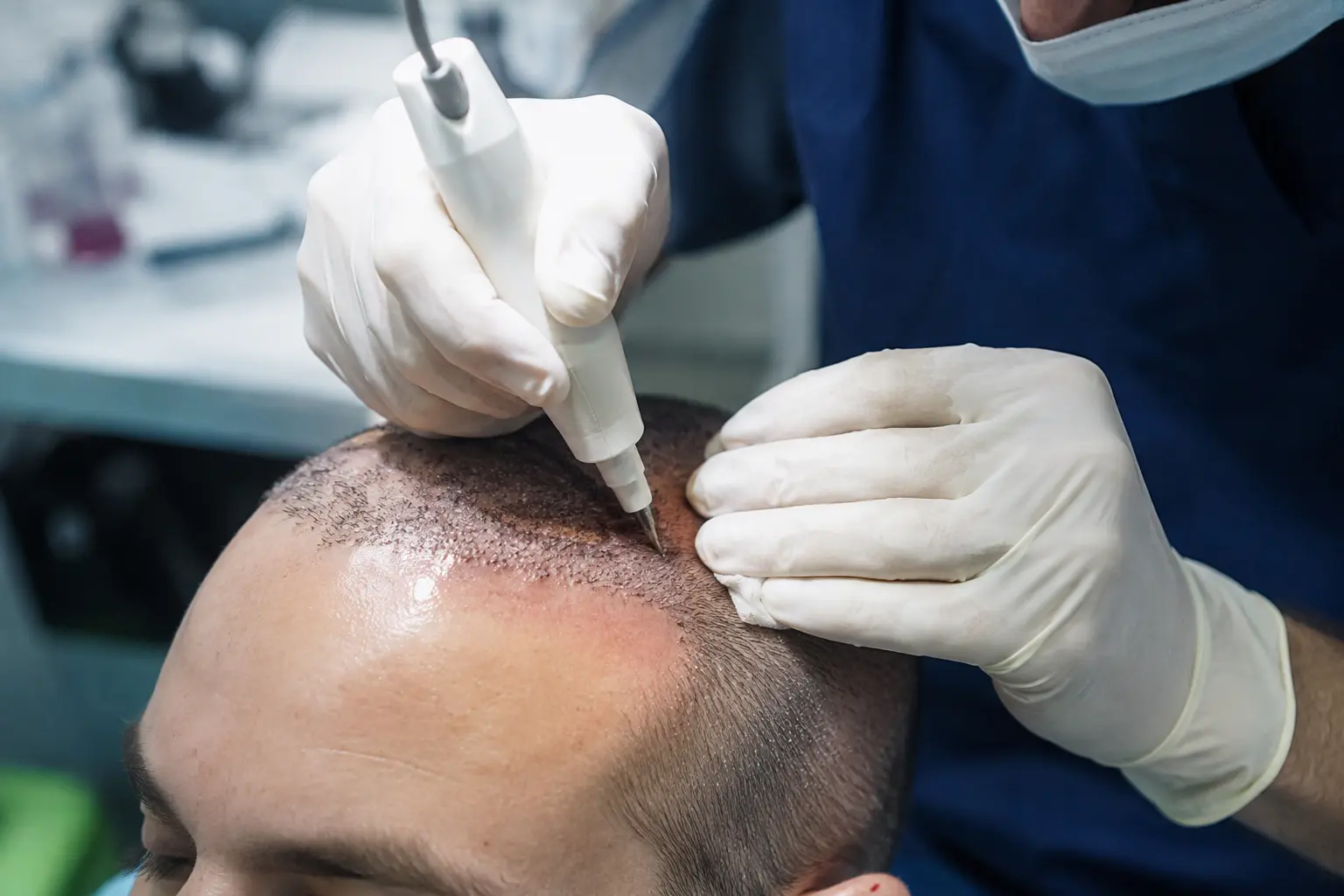
DHI stands for direct hair implantation. In standard FUE, a surgeon first creates small channels in the scalp with a needle or blade, then places each graft into those channels separately using forceps. In DHI, the surgeon loads each extracted follicle into a hollow, pen shaped tool, often called a Choi implanter pen, that creates the channel and inserts the follicle at the same time. This combines two separate steps into one continuous motion.
DHI vs FUE
DHI is often marketed as if it were a completely different surgery from FUE, but the two share the exact same extraction method. The real difference is entirely in implantation.
| Factor | DHI | FUE |
|---|---|---|
| Extraction method | Individual follicles removed one by one | Same individual extraction method as DHI |
| Channel creation | Combined with implantation using a pen | Separate step, done before implantation |
| Implantation tool | Choi implanter pen | Forceps |
| Precision over angle and depth | Very high | Good |
| Shaving requirement | Often not required across the full scalp | Usually required in the donor area |
| Best suited for | Hairline detail, smaller precision zones | Larger treatment areas, higher graft counts |
A full breakdown of DHI compared against FUE covers extraction variants and the evidence behind graft survival in more depth than a single table can.
The DHI Hair Transplant Procedure Step by Step
A full DHI hair transplant session generally follows the same core sequence across clinics, though details vary.
Pre-Procedure Testing and Preparation
Before scheduling surgery, most clinics run standard blood work, including a complete blood count and coagulation testing, along with a general health screening to confirm the patient can safely undergo the procedure. Patients are typically asked to stop smoking for about 2 weeks beforehand, since smoking reduces blood oxygen levels and can affect how well transplanted tissue is nourished during healing. Blood thinning medications are usually paused as well, since they increase bleeding risk during extraction.
Numbing and Extraction
The scalp is numbed with local anesthesia, and the surgeon extracts individual follicles from the donor area, usually the back of the head, using a fine tipped punch tool.
Loading and Implantation
Each extracted follicle is loaded into the implanter pen, which creates the recipient channel and places the follicle into it in one motion. This is repeated across the treatment area, working to match the natural angle and direction of surrounding hair.
Aftercare and Bandaging
Once implantation is complete, an antibiotic ointment and light bandaging are typically applied to both the donor and recipient sites. A full DHI or FUE session commonly takes around 8 hours, depending on how many follicles are being transplanted.
Who Is a Good Candidate for DHI
A few factors determine whether DHI is likely to produce a good result.
- Age: most candidates should be over 25, since hair loss patterns before this age are often still unpredictable
- Hair diameter: thicker hair strands provide more visual coverage per follicle than thinner hair
- Hair density: the safe donor zone at the mid back of the head typically contains 65 to 85 follicular units per square centimeter in a good candidate, according to a clinical reference from the National Institutes of Health, and density below 40 units per square centimeter is generally considered a poor candidate
- Hair and skin tone: hair color closer to the natural skin tone tends to create a fuller looking visual result
- Expectations: realistic expectations about density and timeline matter as much as any physical factor
What the Research Actually Shows
This is worth being direct about, since it is not something most clinic websites will tell you. There is currently no published, peer reviewed study directly comparing DHI implantation outcomes against standard FUE or FUT implantation. Claims that DHI produces meaningfully higher survival or better results than other methods are not backed by dedicated comparative research at this time, they are clinical opinion and marketing language, not settled evidence.
What research does show is something almost no patient resource mentions, how much of the donor area’s total hair actually gets used in a real session. A published study measuring donor area hair counts before and after extraction found that surgeons removed an average of only 35.4% of the total hair present in the harvested zone, ranging from about 29% to 43% depending on the case, according to a study published on donor area effects of follicular extraction. The same study found a graft to hair ratio of roughly 1 to 2.3, meaning each extracted follicular unit contained just over 2 individual hairs on average. This matters because it shows real extraction is deliberately conservative, leaving the majority of donor density untouched to protect the area for future sessions, rather than harvesting as much as technically possible in one sitting.
DHI Advantages
Beyond the implantation technique itself, DHI offers a few practical benefits that make it appealing for certain patients. These come from the pen based workflow rather than any proven survival advantage.
- No shaving required across the full scalp in many cases, since grafts can be implanted into existing hair
- No incisions or stitches, since the implanter pen replaces the need for a separate cutting tool
- Full control over the depth, angle, and direction of each graft during placement
- Can treat areas beyond the scalp, including eyebrows, beard, and mustache
- Shorter time for extracted follicles to sit outside the body, since implantation happens immediately after loading
DHI Side Effects and Risks
Hair transplant surgery is generally safe, but DHI carries some real, documented risks worth knowing beforehand.
- Reaction to anesthesia, though most negative reactions are related to anxiety rather than a true sensitivity to the medication itself
- Infection at the donor or recipient site, occurring in fewer than 1% of hair implantation procedures based on published data
- Shock hair loss, a temporary shedding of transplanted hair within the first 2 months after surgery, with regrowth typically complete within 3 to 4 months
- Bleeding, dizziness, or increased heart rate during or shortly after the procedure
- Folliculitis, small pimple like bumps at the recipient sites while the scalp heals
- An unnatural looking result if grafts are placed at the wrong angle, which is why surgeon experience matters more than the tool being used
Non-Surgical Alternatives Worth Knowing
DHI is not the only option for hair loss, and it is not always the right one, particularly for cost sensitive patients or early stage thinning. Topical minoxidil and oral finasteride are both established, non-surgical treatments that can slow hair loss or support regrowth in some patients. Low level laser therapy is another non-surgical option some patients try. None of these produce the same result as a transplant for someone with significant existing baldness, but they are worth discussing with a healthcare provider before committing to surgery.
DHI Hair Transplant Cost
DHI generally costs more than standard FUE per graft, due to the added precision and surgeon time the pen based technique requires. Reported pricing varies considerably by clinic and country, with a full session commonly falling between $3,250 and $13,500 at several established international clinics, though sessions can run higher depending on graft count, location, and surgeon experience. As with any hair transplant method, a written quote following an actual consultation is the only reliable way to know real cost for a specific case.
Summary
A DHI hair transplant is a modified version of FUE that uses a pen shaped tool to create the channel and implant the follicle in one motion, rather than two separate steps. Good candidates are generally over 25, have reasonably thick hair, and have a donor density above 40 follicular units per square centimeter in the safe donor zone. No dedicated research currently proves DHI produces better outcomes than FUE or FUT, despite common marketing claims, though real data does show that a typical extraction session uses only about a third of the donor area’s total hair, preserving the rest for future needs. Real risks include infection, temporary shock loss, and anesthesia reactions, all generally manageable with an experienced surgeon. Non-surgical options remain worth considering for patients who are not ready for surgery or want to try a lower cost approach first.
Frequently Asked Questions
Is DHI better than FUE?
There is no published research directly comparing the two methods, so this claim should be treated as marketing language rather than proven fact. DHI offers finer control over graft placement, while FUE is generally faster for larger sessions.
How many follicles are removed during a DHI hair transplant?
Research shows that a typical extraction session removes only around 35% of the total hair present in the donor area, preserving the majority of donor density for potential future sessions.
How much does a DHI hair transplant cost?
Reported pricing commonly falls between $3,250 and $13,500 per session, depending on the clinic, country, and number of grafts needed. A written quote from a specific provider is the only reliable way to know actual cost.
References
- National Institutes of Health, StatPearls. Hair Transplantation.
- Effect of Follicular Unit Extraction on the Donor Area. National Center for Biotechnology Information