

Written by Sajid, Health Content Researcher
Researched from peer reviewed medical literature to give an honest, evidence based look at sapphire FUE hair transplant surgery. For informational purposes only, not a substitute for professional medical advice.
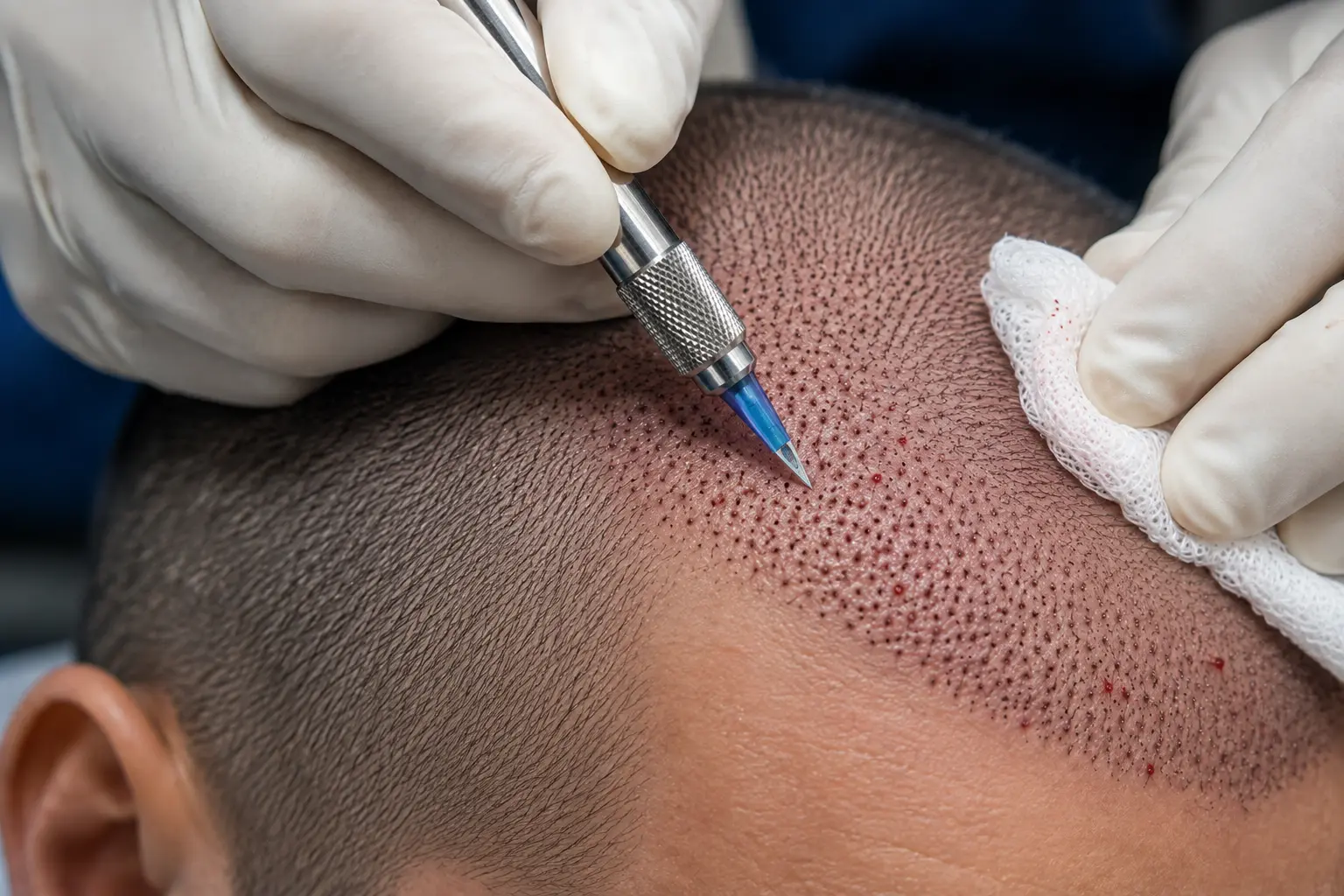
A sapphire FUE hair transplant is not a separate surgery from standard FUE, it is the same procedure with one specific tool swapped out. Extraction, graft handling, and implantation all work the same way. The only real difference is the blade used to open the recipient channels, sapphire crystal instead of surgical steel.
What Makes Sapphire FUE Different
Standard FUE uses a steel blade to create the tiny channels where grafts are placed, which tends to produce a slightly wider, U-shaped incision. Sapphire FUE uses a blade cut from crystal sapphire instead, producing a narrower, V-shaped incision. Sapphire also holds its edge far longer than steel, which can dull partway through a long session. Everything else, extraction from the donor area, graft storage, and implantation, follows the same process covered in our full FUE procedure and recovery guide.
Separating the Evidence From the Marketing
This is the part most clinic websites skip entirely. A peer reviewed study examining different recipient site micro-blade shapes found that a 30 degree sapphire blade caused the least tissue injury of all blade types tested, while a rectangular steel blade caused the most, according to research published on recipient site creation and wound injury. That finding is real and worth taking seriously.
What is worth being honest about is everything built on top of it. Specific figures like “25% faster healing” or “98% graft survival” appear across dozens of clinic websites, but trace back to marketing interpretations of this same study rather than a verified outcome the study itself measured directly. Some research has also found the opposite in certain comparisons, with custom cut steel blades outperforming sapphire on tissue damage in at least one study. The honest summary is that sapphire blades show a genuine, measurable advantage in reduced tissue injury, but claims of dramatically higher survival or universal superiority go beyond what the evidence currently supports.
Sapphire FUE, Standard FUE, and DHI
| Factor | Standard FUE | Sapphire FUE | DHI |
|---|---|---|---|
| Channel tool | Steel blade | Sapphire blade | Choi implanter pen |
| Incision shape | U-shaped | V-shaped | Channel and graft placed together |
| Tissue injury | Higher in comparative testing | Lower in comparative testing | Not directly compared in this research |
| Cost | Lower | Moderate premium | Highest per graft |
DHI sits apart from both since it skips channel creation entirely, combining channel and graft placement into one motion with a pen shaped tool rather than a blade. Choosing between sapphire FUE and DHI usually comes down to whether the priority is broad coverage or fine control over a smaller, detailed area like the hairline.
Sapphire FUE hair transplant Cost
Sapphire FUE typically costs more than standard steel blade FUE, due to the added material cost of the blades and the additional surgical precision involved. In the United States, a full sapphire FUE session commonly falls between $10,000 and $20,000, depending mainly on how many grafts the case requires, with some clinics pricing it only a modest amount above standard FUE and others treating it as a premium tier closer to DHI pricing. As with any hair transplant method, the total depends far more on graft count, clinic, and surgeon experience than on the blade material alone.
Summary
Sapphire FUE is standard FUE with one tool changed, a sapphire blade instead of steel, used only during the recipient channel creation step. Real peer reviewed research confirms sapphire blades cause less tissue injury than several other blade types tested, but many of the more dramatic marketing claims built around that finding are not independently verified. The rest of the procedure, recovery, and candidacy factors are the same ones covered across our FUE vs FUT comparison as well.
Frequently Asked Questions
Is sapphire FUE better than standard FUE?
Research supports a real reduction in tissue injury with sapphire blades, but claims of dramatically higher survival or universal superiority are not independently verified. The rest of the procedure is identical to standard FUE.
Does sapphire FUE cost more than regular FUE?
Yes. In the United States, a full sapphire FUE session commonly runs $10,000 to $20,000 depending on graft count, generally higher than standard FUE due to the added material cost of the blades and the precision involved in using them.
Does sapphire FUE heal faster than steel blade FUE?
Research shows sapphire blades cause less tissue injury than several steel blade types tested, which may support faster healing, though the specific percentages often quoted online are not directly confirmed by the underlying study.
References
- Effect of Different Shapes of Recipient Site Creation Micro-Blades at Varying Angles and Wound Injury. National Library of Medicine, PubMed.