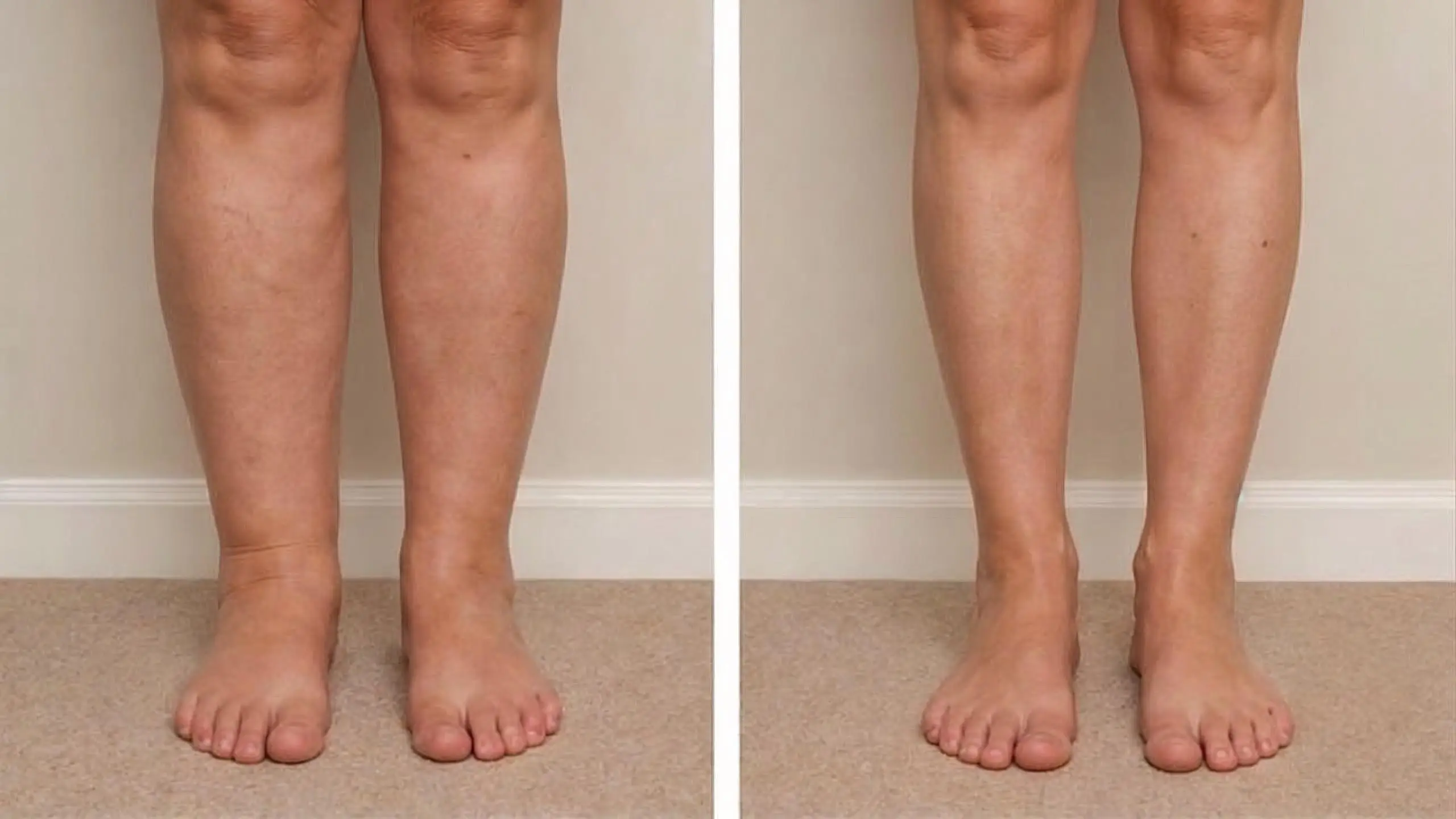
Quick Answer: Cankles themselves are not automatically dangerous. For many people, a thicker ankle-to-calf area is simply a body shape passed down through genetics. But when your ankles swell suddenly, come with pain, or press in and hold a dent, that combination of swollen ankles and cankles can be a sign of edema, poor circulation, or a heart, kidney, or liver issue that needs medical attention. The real question isn’t what cankles look like, it’s whether the swelling behind them points to something happening inside your body.
| Intro | Signs | Causes | Edema Link | Comparison | Relief | FAQs |
Are Cankles Dangerous, Or Just a Body Shape?
If you’ve typed “are cankles dangerous” into a search bar, you’re probably staring at your own ankles right now, wondering if what you’re seeing is normal or a warning sign. Cankles, the term people use to describe an ankle and calf that blend together with little visible taper, are extremely common. Genetics determine much of this. Some people are simply built with less definition between the calf and ankle, and there is nothing unhealthy about that on its own.
Where things get more serious is when the shape changes. If your ankles were once defined and now aren’t, or the fullness came on over days rather than a lifetime, that’s a different story. Are cankles dangerous in that scenario? They can be, because sudden or new swelling is rarely just cosmetic. It usually means fluid is building up in the tissue, a condition doctors call edema, which can stem from something as simple as a long flight or something as serious as heart failure.
This guide walks through how to tell harmless cankles apart from swollen ankles that signal a real problem and need a doctor’s attention, what causes each type, and what actually helps. By the end, are cankles dangerous shouldn’t feel like an open question anymore, just something you can check for yourself in a few minutes.
It helps to think of the ankle as an early warning system for the rest of the body. The lower legs sit at the bottom of the circulatory system, so gravity means fluid pools there first when something isn’t working correctly. That’s exactly why so many unrelated conditions, from a long day on your feet to a heart condition, show up in the same spot.
Signs That Cankles Are Dangerous, Not Just Cosmetic
Whether are cankles dangerous depends almost entirely on the symptoms riding alongside the swelling. A genetic shape stays the same day to day and doesn’t come with pain, discoloration, or heat. Swelling tied to a real problem tends to look and feel different. Here’s what tips the scale from harmless to concerning:
- Pitting: Press a finger above your ankle. A visible dent that stays for several seconds points to fluid, not fat or muscle, behind the swelling.
- One-sided swelling: Genetic or weight-related fullness is usually symmetrical. Swelling in only one leg, especially with pain or warmth, can point to a blood clot and needs same-day care.
- Skin changes: Shiny, stretched, red, or discolored skin over the ankle signals the tissue is under real pressure from trapped fluid.
- Shortness of breath alongside swelling: This combination is one of the more urgent versions of the question, since it can point toward how well the heart is pumping.
None of these signs mean panic is the right response, but they do mean it’s worth getting checked. There’s also a timing test worth trying at home: genetic cankles look the same morning and night, while swelling usually worsens through the day and eases after a night lying flat. That daily swing is often a better clue than the shape itself for judging whether your swollen ankles are just puffy cankles or something that needs attention.
A simple sock test helps too. Take your socks off at the end of the day and look at your skin. Deep indentation marks left behind by ordinary elastic can be an early, subtle form of pitting that’s easy to miss otherwise. On its own it isn’t proof of anything serious, but paired with the other signs above, it’s a reasonable nudge toward asking are cankles dangerous rather than assuming they aren’t.
What Causes Cankles, and When Does the Cause Matter?
Not every cause behind a fuller ankle carries the same weight. Understanding what causes cankles helps settle are cankles dangerous for your specific situation, since the underlying reason changes the outlook entirely.
Genetic Cankles
Some people inherit a body type where the Achilles area carries more soft tissue and the calf sits lower on the leg. This is structural, present since childhood, and doesn’t fluctuate with the time of day. Our breakdown of genetics versus medical causes covers this in more depth.
Weight and Lifestyle Related Cankles
Extra body weight can increase fat around the lower leg, and a sedentary lifestyle slows fluid’s return toward the heart. This version shifts with activity and diet and responds well to movement.
Medical Cankles
This is the category where the concern becomes real. Medical causes include heart conditions, kidney disease, liver disease, blood clots, lymphedema, and medications like calcium channel blockers or steroids.Only a qualified healthcare professional can determine whether ankle swelling is caused by a medical condition or by normal body variation.These bring fluid retention that builds quickly and often affects more than just the ankles. Our guide on what cankles are actually a sign of lays out each type side by side.
Age plays a role too. As people get older, weakened vein valves make it harder for blood to travel back up the leg, a condition called venous insufficiency, and it’s one of the more common answers behind are cankles dangerous in adults over fifty.
Medications deserve a mention as well. Blood pressure drugs in the calcium channel blocker family, certain diabetes medications, and long-term steroid use are all known to cause fluid retention in the lower legs. If your ankles changed shape around the same time you started a new prescription, that timing is worth raising at your next appointment rather than dismissing as coincidence.
The Edema Connection: Why Swollen Ankles and Cankles Deserve Attention
Edema is the medical word for fluid building up in the body’s tissue, and it’s the biggest reason swollen ankles or noticeable cankles become a health question rather than a styling one. According to the Mayo Clinic, edema in the legs can result from prolonged standing, pregnancy, certain medications, or more serious heart, kidney, or liver conditions, and it often comes with stretched or shiny skin over the area. Pregnancy-related swelling gets its own conversation; our piece on pregnancy cankles causes, symptoms, and relief covers what’s normal and what crosses into preeclampsia territory, a genuine emergency.
The Cleveland Clinic notes that edema paired with shortness of breath, chest pain, or sudden weight gain should be treated as urgent rather than watched at home. That’s the clearest line for judging are cankles dangerous in your own case: isolated, stable, symmetrical fullness is usually fine, while rapid or breathless swelling is not something to wait out.
Fluid follows gravity, and the ankle sits at the lowest point of the leg for most of the day, so even a mild imbalance elsewhere in the body tends to surface there first. That’s part of why so many people with swollen ankles, or cankles that seem fuller than usual, end up asking are cankles dangerous: the ankle is often the earliest place the body flags a problem.
Cankles vs Ankles vs Edema: A Side-by-Side Comparison
People often mix up three related but different things: normal cankles, temporary swollen ankles, and edema tied to an underlying condition. Are cankles dangerous usually comes down to which of these three columns describes you, so here’s how they compare at a glance.
| Feature | Genetic Cankles | Temporary Swollen Ankles | Edema (Medical Cause) |
|---|---|---|---|
| Onset | Lifelong, present since youth | Hours to a day, after travel or standing | Days, often worsens over time |
| Symmetry | Both legs equally | Usually both legs | Can be one leg or both |
| Pitting when pressed | No | Rarely | Often yes |
| Pain or warmth | None | None | Sometimes, especially with clots |
| Improves with elevation | No change | Yes, within hours | Partial or no improvement |
If you’re still unsure which column fits, our comparison guide on cankles vs ankles and how to tell the difference walks through visual and physical cues in more depth.
What to Do About Cankles
Whether or not are cankles dangerous applies to you, most people want relief from the puffiness and heaviness. The approach differs by cause.
For Genetic or Lifestyle Cankles
- Move regularly. Walking activates the calf muscle pump, helping push fluid back toward the heart.
- Elevate your legs above heart level for fifteen to twenty minutes in the evening.
- Cut back on excess sodium, which encourages the body to hold onto water.
- Wear compression socks during long flights, drives, or shifts spent standing.
For a full routine, our guide on how to get rid of cankles covers targeted exercises and daily habits that make a visible difference within weeks.
When Swelling Signals a Medical Issue
According to MedlinePlus, sudden swelling in one leg, swelling with chest pain or difficulty breathing, or swelling that doesn’t ease with rest and elevation should prompt a call to a healthcare provider. This is exactly the scenario where are cankles dangerous stops being a hypothetical and becomes a practical, urgent question. A doctor will typically check blood pressure, order bloodwork for kidney and liver function, and may request an ultrasound if a clot is suspected. These tests help identify the underlying cause so the right treatment can begin.
Diet plays a bigger role than most expect. Sodium encourages water retention, while potassium-rich foods like bananas, leafy greens, and sweet potatoes help balance it out. Staying hydrated, counterintuitively, also reduces retention, since a dehydrated body tends to hold onto the fluid it has. Tight socks and ill-fitting shoes can restrict circulation too, so switching to breathable, properly fitted footwear is one of the simplest fixes available.
Summary: Are Cankles Dangerous?
Most of the time, cankles are simply a body shape, inherited and stable, and the answer is a reassuring no. The picture changes when swelling shows up suddenly, sits on only one side, holds a dent, or travels with pain, warmth, shortness of breath, or skin discoloration. In those cases, are cankles dangerous shifts from unlikely to worth checking, since the underlying cause could be edema tied to the heart, kidneys, liver, or a clot. Knowing your own baseline and acting on new symptoms is the simplest way to protect yourself.
Frequently Asked Questions
Are cankles dangerous if they’ve always looked this way?
No. If your ankle and calf area has looked the same since your teenage years and doesn’t come with pain, pitting, or discoloration, it’s almost certainly genetic rather than a medical concern.
Are cankles dangerous during pregnancy?
Mild swelling is common in pregnancy, but sudden swelling paired with high blood pressure, headaches, or vision changes can signal preeclampsia and needs immediate attention.
Are cankles dangerous if only one ankle is swollen?
One-sided swelling, especially with pain, warmth, or redness, should not be ignored, since it can point to a blood clot that requires urgent evaluation.
Note:
This educational article was researched using publicly available information from Mayo Clinic, Cleveland Clinic, and MedlinePlus. It is intended for informational purposes only and is not a substitute for professional medical advice, diagnosis, or treatment.